There is a cruise tier that most guide articles skip. Budget mass-market (Carnival, Royal Caribbean, NCL) gets covered in detail. True luxury (Regent, Silversea, Seabourn) gets covered in detail. The premium tier in between, the one most experienced cruisers actually book, gets a few throwaway paragraphs of “and you could also try Celebrity.”
This article is for travelers who have done mass-market cruising and want to know what comes next, but who are not ready to spend $600 per night per cabin on a luxury line. It covers what is actually different about the premium tier; which three lines worth comparing (Holland America, Celebrity, Princess); what you gain over mass-market and what you give up against true luxury; and an honest read on the tradeoffs.
Holland America cruise deals on Booking.com · Celebrity Cruises on the official site · Princess Cruises on the official site
What actually makes a line “premium” and not “mass-market”
There are four real differences between the premium tier and the mass-market tier. None of them are about cabin furniture.
Ship size matters. Premium-tier ships run roughly 1,500 to 3,000 passengers. Mass-market ships run 4,000 to 7,000. The bigger the ship, the longer the embarkation lines, the more crowded the buffet, and the harder it is to have a quiet dinner. Premium-tier ships do not solve the lines-at-boarding problem; that is industry-wide, but they do solve the rest of the crowding problem in a way that mass-market ships cannot.
Service staff ratios matter more. Premium-tier lines run roughly 1 staff member per 1.6 passengers. Mass-market lines run closer to 1 per 2.5. The ratio shows up in the speed of drinks at the bar, the attentiveness at dinner, and the quality of the cabin turnarounds. It is not the kind of difference that shows up in a brochure; it is the kind of difference that shows up after day 4 of a 10-day cruise when you are tired.
Dining is included, in a real sense. All three premium-tier lines have upgraded their main dining rooms over the past 5 years. Holland America’s main dining room menus now lean toward regionally-sourced ingredients rather than the cruise-industry standard menu rotation. Celebrity’s main dining room has a real chef (not contract catering) running it. Princess’s main dining is consistent and well-paced. Specialty restaurants still cost extra on all three, but the included dining is enough that most travelers do not need the upcharge.
Itinerary mix is more interesting. Premium-tier lines do less 3-day Caribbean loops and more 7- to 14-day destination-rich itineraries. Alaska, the Mediterranean, Northern Europe, Canada/New England, Asia, South America. The Caribbean is still in the mix but it is no longer the bread-and-butter of the schedule. Mass-market lines have the inverse mix.
The three lines worth comparing
Holland America, Celebrity, and Princess are the three premium-tier lines worth comparing. Each occupies a distinct slot.
Holland America Line
Holland America is the oldest of the three (140+ years) and has the most consistent positioning. The line leans traditional: ballroom-style evening entertainment, a piano bar that usually has a real jazz trio, a quiet dining room. Itinerary strength is Alaska, Northern Europe, Canada/New England, and the longer South America cruises. The ships are mid-size. Demographics skew older, which is the natural audience for this article anyway.
Holland America’s premium edges: it is the only one of the three to consistently do 25+ day grand voyages (Africa, South America, Asia) that work well for the 60-plus traveler who has the time and is not in a hurry. The ships are a bit more sober than Celebrity’s or Princess’s, which is the right vibe for many readers of this article.
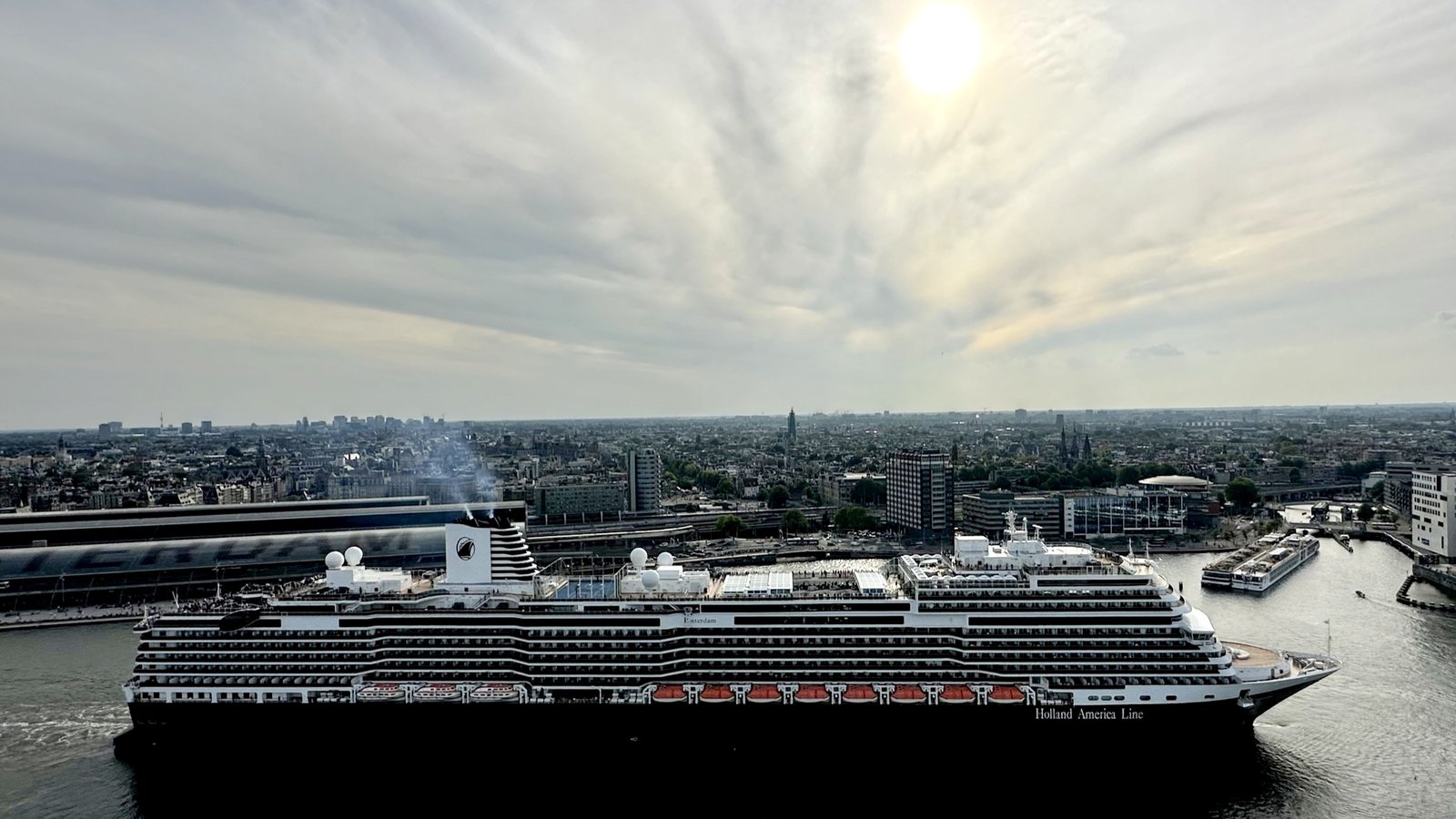
Holland America cruise deals on Booking.com
Holland America Line is the right answer for travelers who want the most traditional of the three premium-not-luxury lines. The line is the oldest of the three (140+ years) and has the most consistent positioning: ballroom-style evening entertainment, a piano bar that usually has a real jazz trio, a quiet dining room. Itinerary strength is Alaska, Northern Europe, Canada/New England, and the longer South America cruises. Holland America is the only one of the three to consistently do 25+ day grand voyages (Africa, South America, Asia) that work well for the 60-plus traveler with time. Skip Holland America for travelers who want the largest ship amenities or a more resort-at-sea experience.
Celebrity Cruises
Celebrity is the modern premium of the three. The Solstice-class and Edge-class ships have a more contemporary feel than Holland America: the Edge-class Magic Carpet (an outdoor platform that extends out from the side of the ship) is a genuinely clever piece of design that other lines have since imitated. Mediterranean and Caribbean itineraries dominate, and Celebrity’s pricing on Asia and Alaska itineraries tends to be aggressive.
Celebrity’s premium edges: dining is the headline. Luminae is the flagship restaurant and it is included in most cabin categories. Specialty restaurants still cost extra, but the main dining room is well above the industry baseline for a premium-tier line. The line is the youngest of the three by demographic median age. The Solstice-class and Edge-class are designed for a slightly younger premium audience than Holland America.
Celebrity Cruises is the right answer for travelers who want a more modern premium experience at a more accessible price point. Celebrity’s Edge-class ships (introduced in 2018) are the most modern in the premium tier, with the Magic Carpet (a movable platform on the side of the ship), infinite verandas, and Eden (a multi-deck lounge/garden space at the back of the ship). The line leans modern: design-forward venues, contemporary entertainment, less traditional dining. Celebrity is the right answer for travelers who want premium without the formality of the older lines. Skip Celebrity for travelers who want the most traditional ballroom-and-jazz-trio experience.
Princess Cruises
Princess is the steady middle of the three. The line has been around for 50+ years and the ship designs have aged well. Princess’s premium edges are the included premium dining program (the upcharge version of specialty dining is bundled into specific cabin categories), the Movies Under the Stars poolside theater (a small thing, but it works), and the Sanctuary: an adults-only sundeck that is a much better answer to the cruise industry’s children-on-everything problem than the alternatives.
Princess’s premium tradeoff: fewer itinerary options than Holland America, fewer ship-modernity bets than Celebrity. The line is a known quantity and that is part of the value.

Princess Cruises on the official site
Princess Cruises is the right answer for travelers who want a balanced premium experience with strong itinerary options. Princess’s positioning is between Holland America (most traditional) and Celebrity (most modern): ballroom-and-show entertainment but with contemporary venues and a more relaxed feel. The line’s signature is the Movies Under the Stars poolside screen and the Sanctuary adults-only deck. Princess has strong itineraries in Alaska, the Caribbean, and the Mediterranean, with the Crown Princess and Royal Princess classes being the workhorses. Princess is the right answer for travelers who want premium amenities without the formality of the older lines. Skip Princess for travelers who want the most traditional or the most modern of the premium tier.
What you give up versus true luxury
The honest comparison to true luxury (Regent Seven Seas, Silversea, Seabourn. These are all-suite, all-inclusive, 300 to 700 passengers.) is not flattering to the premium tier. The differences that show up:
Inclusion is partial. Premium tier includes main dining, standard beverages, the basic entertainment. Premium dining venues, premium wines, premium spirits, shore excursions, gratuities, WiFi, specialty coffee. Most of these are extra. True luxury is mostly or fully inclusive. A $300 per night per cabin cruise on Holland America becomes $400 per night after the extras. True luxury hits the cost of an upgrade but it is inclusive.
Cabin space is smaller. Premium-tier cabins run 150 to 200 sq ft. Luxury line cabins start at 300 sq ft and go up. For a 7-day cruise this is a meaningful difference; for a 14-day cruise it is the difference between enjoying the cruise and enduring the cruise.
Service depth. Premium tier staff are well-trained and friendly. True luxury staff know your name by day 3, prepare your preferred cocktail without asking, and have actually read your passenger profile. The first is the cruise industry average; the second is what the luxury tier is selling at $600+ per night.
Itinerary density. Premium-tier ships visit 6 to 8 ports on a 7-day cruise. Luxury ships visit 4 to 5 and stay longer. Premium is for travelers who want to see as many ports as possible. Luxury is for travelers who would rather do fewer ports in depth.
The honest summary: premium tier delivers 80% of the true-luxury experience at 50% of the per-night cost. The 20% that is missing matters most on longer cruises (10+ days) where the cabin-space and service-depth differences compound.
The deals and pricing you will actually see
Premium-tier pricing is genuinely variable. Two travelers on the same ship on the same sailing can pay $500 each other on adjacent sailings depending on promotions, loyalty tier, and timing. A few useful rules:
Book 6 to 9 months ahead for the best pricing on Alaska, Mediterranean, and Northern Europe. Last-minute deals exist but they are usually on the Caribbean and they are usually on itineraries that you would not have chosen otherwise.
Loyalty programs matter. Each line’s loyalty program gets you room upgrades, priority boarding, and small amenities. The 3-tier to 4-tier loyalty structure means a 5th cruise on Princess gets you meaningfully better treatment than a 1st cruise. For a 60-plus traveler who plans to cruise regularly, this compounds.
Repositioning cruises are a secret. Lines reposition ships twice a year. Atlantic crossings in the fall, Pacific crossings in the spring. The price is competitive with the line’s regular Caribbean or Mediterranean sailings but the experience is 14 days at sea with no ports. Repositioning is for travelers who want the sea-day experience and the low-cost cruise fare. There is a real percentage of the 60-plus cruise market for whom this is the only trip they take all year.
Skip the “free upgrades” pitches. Most premium-tier cabins are not worth the upgrade cost over the standard balcony. The premium for a suite or mini-suite tends to fund extra dining and beverage credit that rarely pays back. Book the cabin category you actually need.
What to skip
Last-minute Caribbean deals from any of the three. These deals typically bundle a 3- or 4-day cruise on an older ship with a cabin assignment that nobody really wanted. The pricing looks great but the experience is the worst of the line’s offering. Repositioning and shoulder-season Mediterranean deals are a different story.
Casino promotions. Premium-tier lines have onboard casinos that work hard to incentivize play. The math is bad. Set a budget and ignore the promotions.
The upcharge photos package. Premium-tier lines offer a professional photo package that runs $300 to $500. Most travelers use their phones and the result is fine.
Premium tier on the cheapest cabin category. A 150 sq ft interior cabin on a 12-day cruise is genuinely unpleasant. The booking math may favor the interior but the experience math does not. Book at least the oceanview cabin. The difference is meaningful on multi-day cruises.
The bottom line
Pick the premium tier if you’ve outgrown mass-market cruising and aren’t ready to step into true luxury. Book Holland America for traditional cruise vacations with destination-rich itineraries. Book Celebrity for Mediterranean and Caribbean sailings with a slightly younger premium vibe. Book Princess if you want a steady, predictable cruise at the middle of the premium tier.
The right pricing window for shoulder and summer sailings is 6 to 9 months out. The right balcony or verandah cabin category is the right standard (rather than the cheapest or the most expensive). The right itinerary length is 10 to 14 days for first-time premium-tier cruises. Shorter than that and the experience-vs-cost math is worse.
Holland America cruise deals on Booking.com · Celebrity Cruises on the official site · Princess Cruises on the official site
This article contains affiliate links to Booking.com for Holland America deals. Celebrity and Princess are referenced but not currently in our active affiliate stack. Our editorial recommendations are independent of affiliate relationships. See our affiliate disclosure for details.
Research note: Premium-tier cruise line positioning shifts over multi-year cycles. Holland America’s positioning as of Summer 2026 is the longest-standing of the three; Celebrity has invested in modern fleet refresh and premium dining positioning; Princess has rebuilt its premium tier around mid-size ships and included-dining bundling. Specific sailings, prices, and promotions shift weekly. Verify on each line’s current booking page at planning time.