Galápagos is the rare wildlife destination that delivers on its promise. The animals have no fear of humans. The landscapes are alien. The trips are well-run because the Ecuadorian government regulates them tightly.
The question for travelers over 60 isn’t whether to go. It’s how to go: small-ship expedition or land-based with day trips. The two options produce different experiences, different price tags, and different physical demands. The right pick depends on what kind of trip you want.
This article is for travelers over 60 who have decided to go to the Galápagos and want a clear-eyed read on the two paths, the operators worth comparing, and the physical realities of each. It assumes 7 to 10 days as the right length for a first trip, with the physical demands of each option spelled out honestly.
Browse Galápagos cruises on Viator · Browse Galápagos tours on GetYourGuide
What the Galápagos does for a 60-plus traveler
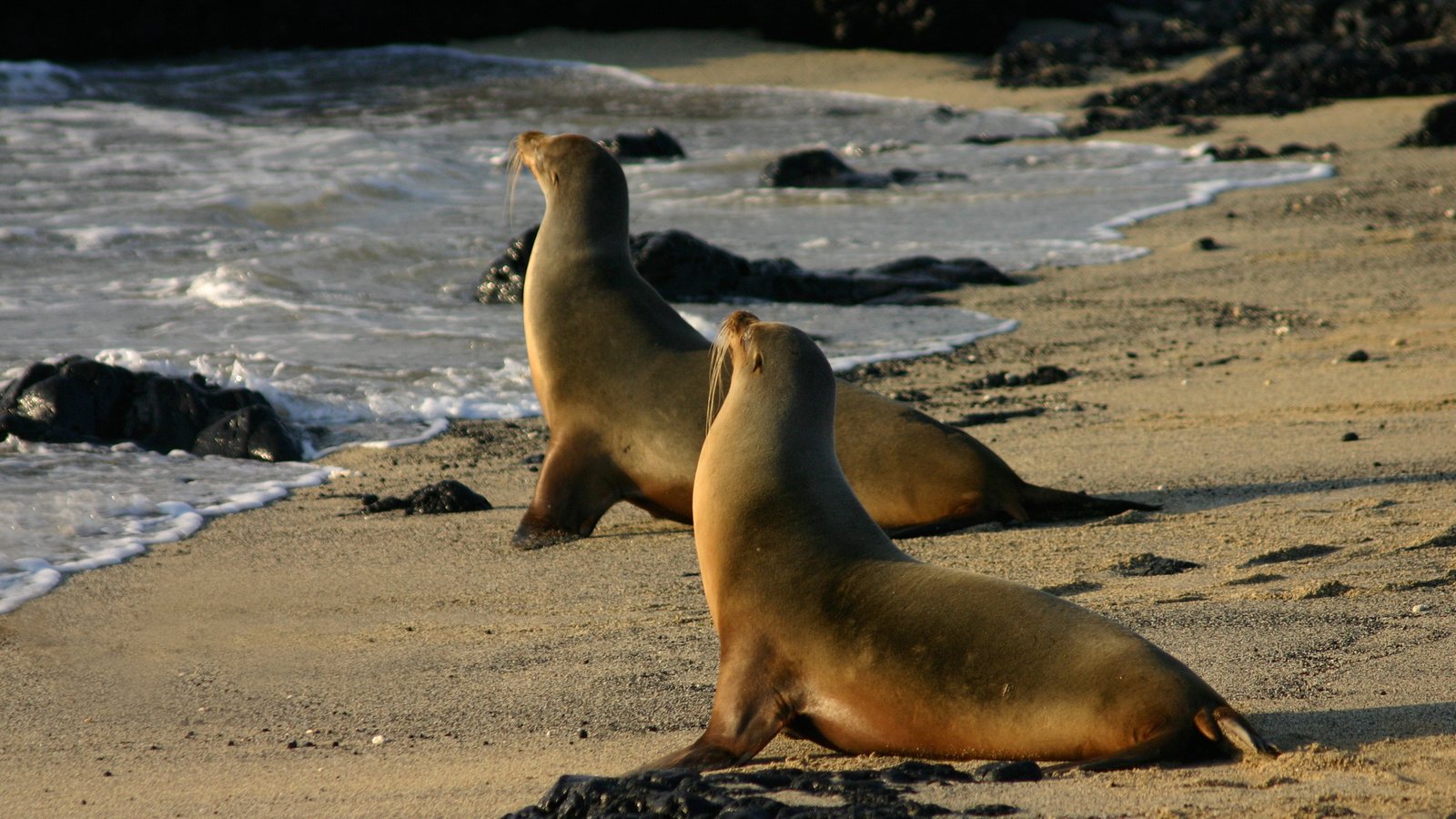
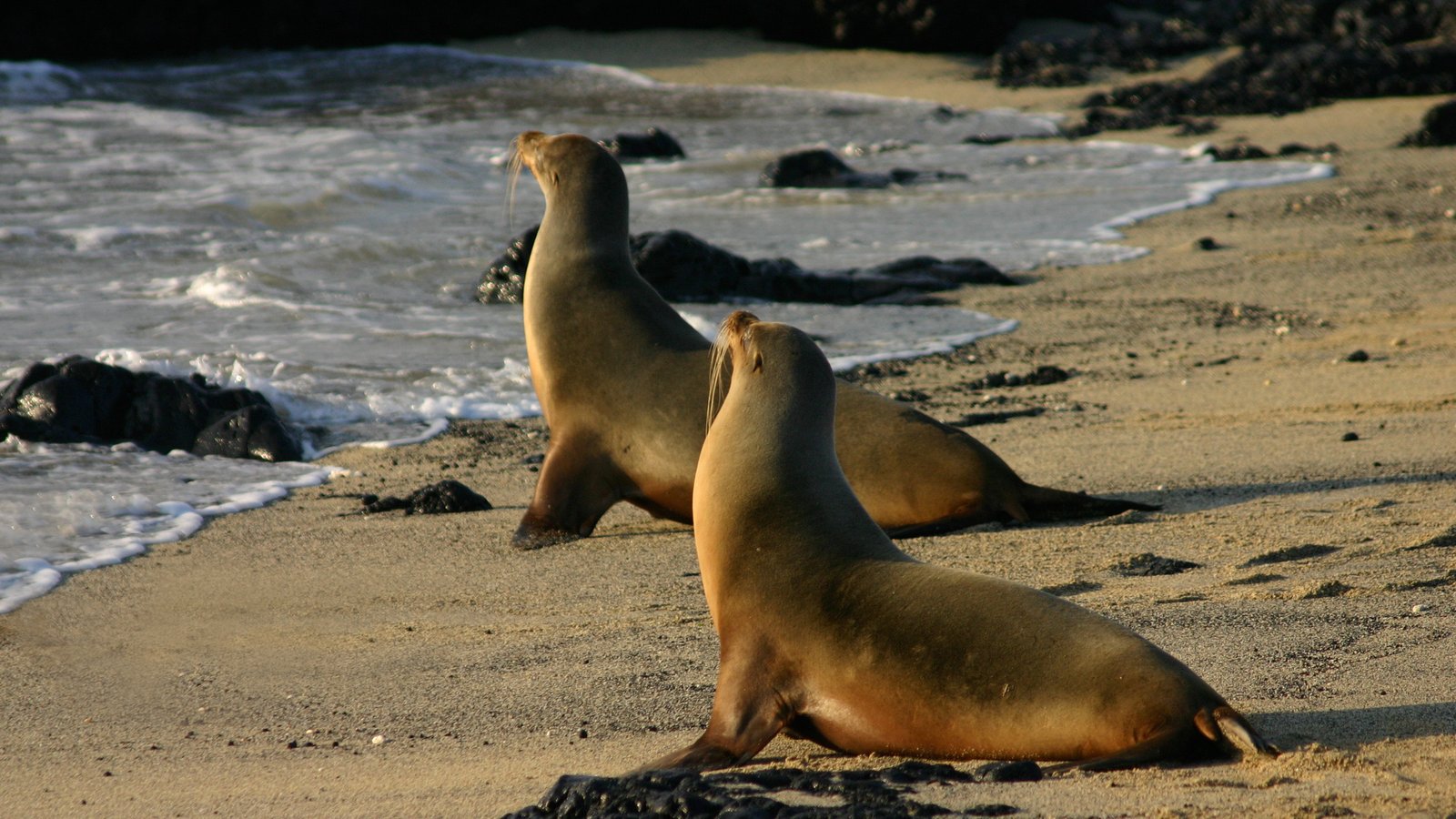
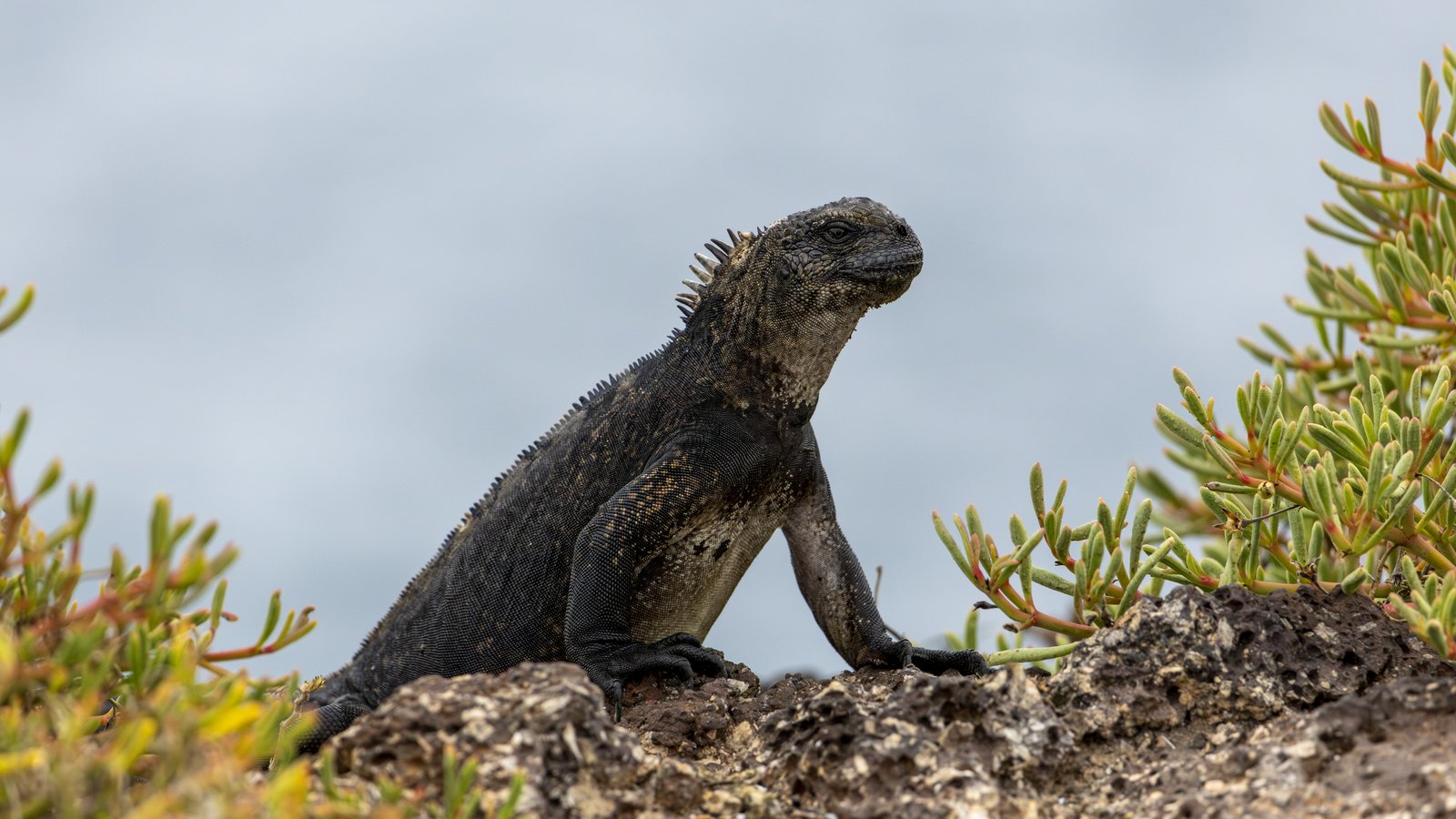
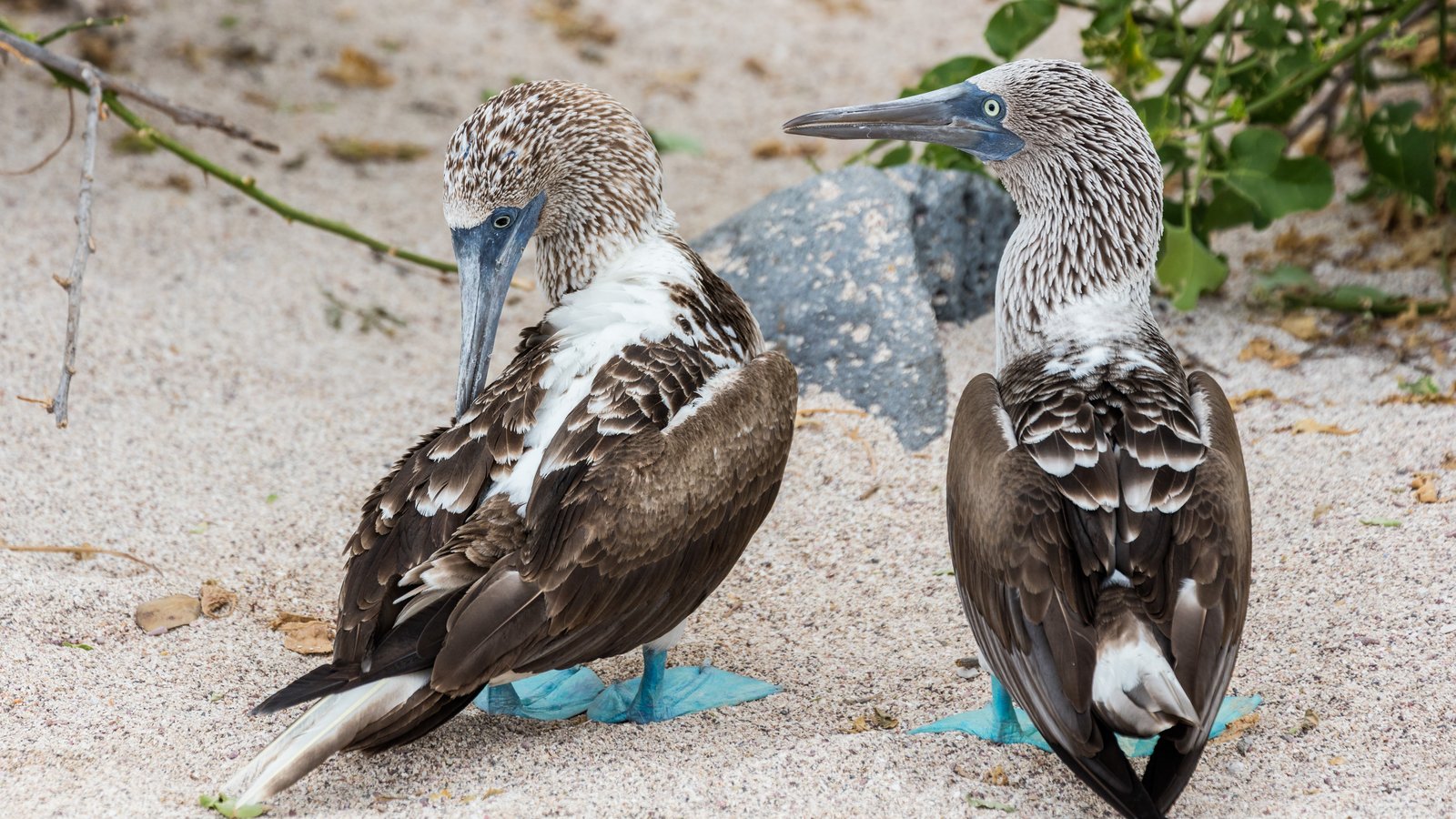
Wildlife density without the safari logistics. The Galápagos is the rare wildlife destination where the animals are present, visible, and approachable in the wild without vehicle access. Sea lions on the beach. Marine iguanas on the rocks. Blue-footed boobies on the cliff edge. The animals have no natural fear of humans, so the viewing distance is zero. For a 60-plus traveler who has done a traditional African safari and is looking for the next wildlife experience, the Galápagos delivers something Africa cannot: the same animals, day after day, in walking distance of the landing point.
Stable climate year-round. The Galápagos sits on the equator, so the seasonal variation is minimal. The water temperature is 70 to 80°F year-round. The air temperature is 70 to 85°F. There is no winter-summer cycle that would change what you pack. The year splits into warm/dry (June through November) and warm/wet (December through May) seasons, both of which are perfectly good for travel; the “wet” season is actually a better time for snorkeling because the water is clearer and warmer.
Tightly regulated. The Ecuadorian government runs the Galápagos as a national park with strict visitor rules: every boat has a certified naturalist guide, every visitor is in a group of no more than 16, every island visit is on a marked trail. The downside is that the experience is structured. The upside is that it is high-quality and well-protected.
The right size for a 60-plus trip. A 7- to 10-day Galápagos trip is long enough to feel like an experience and short enough that the pace is manageable. The islands are concentrated (the inhabited part of the archipelago is a small area of the ocean), so the boat moves between islands efficiently. There are no long drives or multi-day transits. The trip is boat-based, with daily landings and snorkeling. The closest analog is a small-ship Mediterranean cruise with wildlife.
Small-ship vs. land-based: the two options
The two options are genuinely different trips, not two paths to the same experience.
Small-ship expedition
The canonical Galápagos experience. 16 to 100 passengers on a small cruise ship, 7 to 10 days, with daily excursions to different islands. The naturalist guide is on board. The ship is the hotel. Routes are pre-set (western, northern, or central islands) and the ship moves at night so you wake up at a new island each morning.
A small-ship Galápagos trip is shaped by the route the operator runs, and the three named in the article — western, northern, or central islands — each deliver a different version of the archipelago. The western route concentrates on the wildlife-rich islands of Isabela and Fernandina, with stronger chances of seeing the Galápagos penguin and the marine iguana colonies. The northern route leans on Genovesa and Marchena, with the heaviest bird life. The central route covers the islands closest to Santa Cruz and is the shortest. A 7- to 10-day small-ship trip is the right answer for travelers who want to wake up at a new island each morning and not pack and unpack.
The right answer for: travelers who want the full multi-day experience, travelers who don’t want to pack and unpack every 2 to 3 days, travelers who want the social aspect of a small ship with 12 to 30 other passengers, travelers who want the social flexibility of eating with new people each night.
The right answer against: travelers with strong mobility concerns (the daily landings involve wet landings via zodiac and some scrambling on uneven lava rock), travelers who want a quieter, more independent trip, travelers who can’t commit to a week of structured time on a boat.
Physical demands: the small-ship experience is moderate. The days are full (early breakfast, two excursions a day, evening briefings) but the pace is not aggressive. The wet landings require stepping into knee-deep water from the zodiac, which is harder for travelers with knee or hip concerns. The dry landings (using a dock or flat rocks) are easier.
Pricing: $6,000 to $20,000+ per person for 7 to 10 days, all-in. The range is wide because cabin class and ship size matter. The Lindblad National Geographic partnership is at the top of the price band ($10,000 to $18,000+ per person for 7 nights) and is the strongest small-ship program. Smaller operators (Ecoventura, Metropolitan Touring, Quasar) run similar itineraries at $6,000 to $12,000 per person.
Land-based with day trips
The alternative that most 60-plus travelers underrate. 4 to 5 nights on one of the inhabited islands (Santa Cruz, San Cristobal, or Isabela) with day trips to nearby uninhabited islands by small boat. The hotel is the base, the day trips are the excursions.
Land-based trips anchor on one of the three inhabited islands the article names, and the choice of base matters more than the choice of day-trip operator. Santa Cruz is the most-developed base: Puerto Ayora is the largest town in the Galápagos, with the Charles Darwin Research Station, the fish market, and the easiest flight connection back to the mainland. San Cristobal is the quieter alternative, with Puerto Baquerizo Moreno as the small capital and the most direct flights from the mainland. Isabela is the remote base: a 2-hour ferry from Santa Cruz, fewer hotels, but the most dramatic scenery and the strongest sea-life day trips.
The right answer for: travelers with strong mobility concerns (the hotel-day-boat rhythm is less physically demanding than the small-ship rhythm), travelers who want a quieter, more independent trip, travelers who want to extend to a mainland Ecuador or Galápagos land trip, travelers who want to spend less.
The right answer against: travelers who want the multi-island variety (land-based covers 1 to 2 islands plus day-trip destinations, not the full 7 to 8 islands), travelers who want the social aspect of a small ship.
Physical demands: the land-based experience is moderate to light. The day trips are 4 to 6 hours, with 1 to 2 hours of walking or snorkeling per excursion. The hotel-pool-rhythm provides recovery time. The most physically demanding part is wet landings, which can be skipped on land-based itineraries.
Pricing: $3,000 to $6,000 per person for 7 to 10 days, all-in (including the cruise-day-trip component). The lower price is the main advantage of the land-based option, but the trade is fewer islands.
The operators worth comparing
Lindblad Expeditions (National Geographic partnership)
Lindblad has been operating Galápagos since 1967 in partnership with National Geographic since the 1990s. The partnership brings the National Geographic photographers, naturalists, and writers on board as special guests on certain sailings. The 16-passenger National Geographic Islander II and the 96-passenger National Geographic Resolution are the two main ships. The Islander II is the right pick for 60-plus travelers who want a smaller ship with fewer passengers. The Resolution is for travelers who want the larger ship amenities.
Ecoventura
Ecoventura runs the 20-passenger Theory and the 16-passenger Origin. Both ships are luxury small-expedition class, similar in scale to Lindblad’s Islander II. Pricing is generally $1,000 to $3,000 less per person than Lindblad. The right answer for travelers who want the small-ship experience at a slightly lower price point, and are comfortable with a slightly less well-known brand.
Land-based operators
Smaller operators run land-based itineraries out of Santa Cruz, San Cristobal, and Isabela. The strongest are Metropolitan Touring (a long-established Ecuadorian operator with the local-supplier expertise that international brands lack), Ecoventura (also offers a land-based option out of Santa Cruz), and a few smaller specialists.
The land-based book is more research-heavy than the small-ship book. International operators (G Adventures, Intrepid) offer land-based 7-day itineraries, but the experience quality varies. The right answer for the 60-plus traveler is to use a local operator with deep Galápagos connections rather than a generic international package.
The 8-day itinerary, both options
Small-ship option:
– Days 1-2: Board at Baltra, sail to Genovesa or similar northern island
– Days 3-5: Daily landings at western islands (Isabela, Fernandina, Santiago) with morning and afternoon excursions
– Days 6-7: Central islands (Santa Cruz highlands, Bartolome) with the famous Pinnacle Rock
– Day 8: Disembark at Baltra, fly back to Quito or Guayaquil
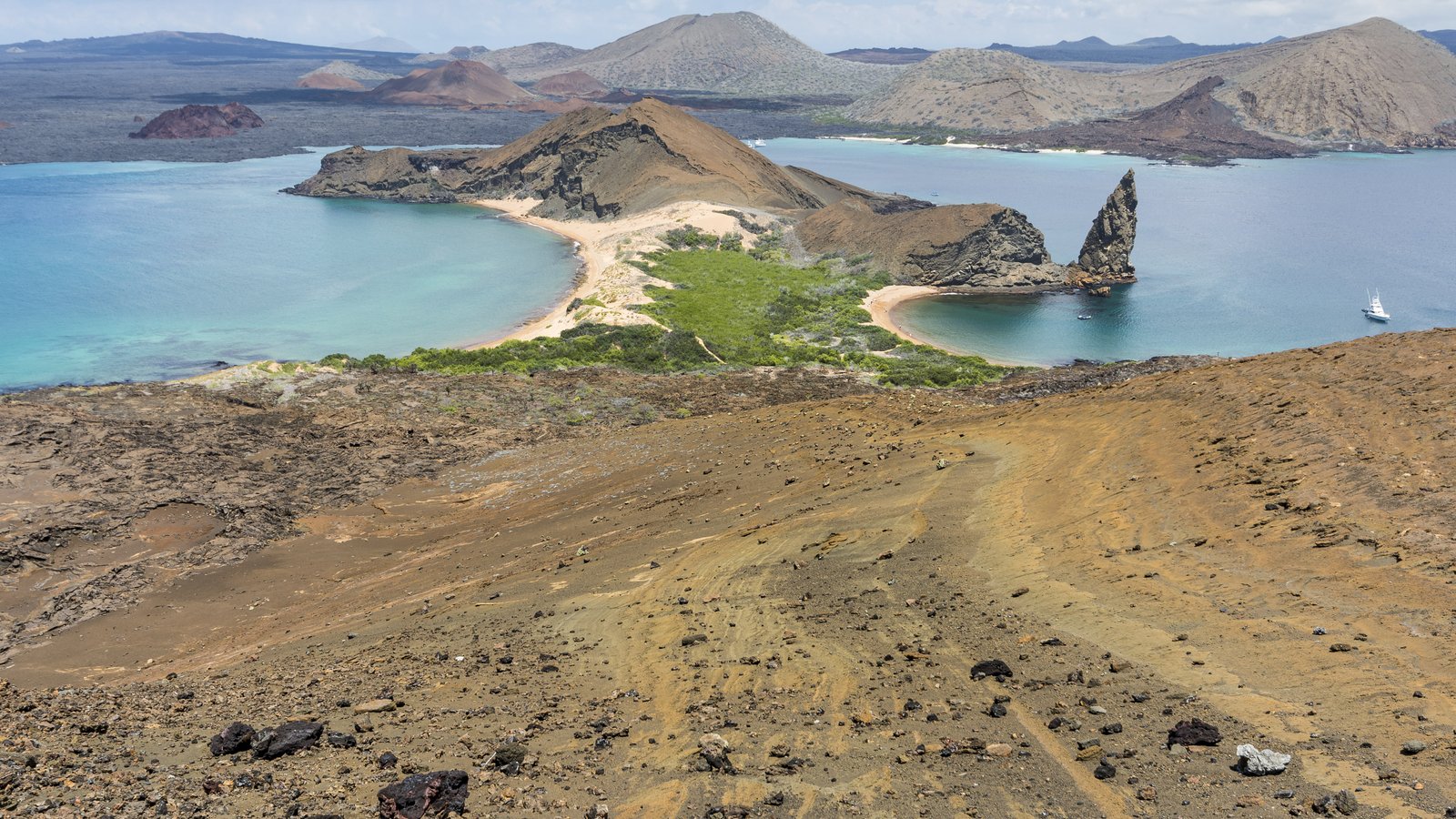
Land-based option:
– Days 1-3: Santa Cruz (highlands tortoise reserve, Charles Darwin Research Station, snorkel at Tortuga Bay)
– Day 4: Day trip to Bartolome (Pinnacle Rock hike and snorkel)
– Day 5: Day trip to an uninhabited island near Santa Cruz (South Plaza or similar)
– Days 6-7: San Cristobal (Interpretation Center, Leon Dormido, optional land-based option for extension)
– Day 8: Fly back to mainland
Both shapes work at a moderate physical pace with one rest morning. The small-ship version has more island variety. The land-based version has more downtime and is more accessible.
What to skip
Day trips from the mainland (Guayaquil or Quito). Some operators offer 3- or 4-day “Galápagos” packages that are mostly mainland time with one short day-trip flight to the islands. The day-trip is not enough. A real Galápagos experience needs 4+ days on the islands.
Self-arranged itineraries without a guide. Independent travel in the Galápagos is technically possible (Ecuadorian law requires a guide for most islands, but some areas are accessible) but the experience is sharply worse without the naturalist context. The animals are present, but the explanation of the species, the geology, the conservation history is what makes the trip. Book with a guided operator.
“Cheap” Galápagos trips below $3,000. The trip is expensive because the boat and the guide are expensive. Sub-$3,000 itineraries cut corners on either the boat (older, smaller, less stable) or the guide (less qualified). The right answer is to wait and save, or to do the land-based option which has a lower price floor.
Cruises longer than 10 days. The Galápagos is concentrated. A 12- or 14-day cruise is repeating islands and burning time. The 7- to 10-day range is the right window.
The bottom line
Pick the small-ship expedition for the full multi-island experience. Pick land-based for the gentler trip and the lower price. The right season is December through May (warmer water, more marine life) for snorkeling focus, or June through November (slightly cooler but dry) for hiking focus. Book 9 to 12 months out for the best cabin selection. Use Lindblad or Ecoventura for the small-ship option; use a local operator (Metropolitan Touring) for the land-based option. The trip costs $3,000 to $20,000+ per person for 7 to 10 days depending on which option you pick.
The Galápagos rewards the traveler who shows up ready to look at animals. Bring binoculars. Bring a waterproof layer. Bring a willingness to be in the water. The trip is what the brochures promise.
Browse Galápagos cruises on Viator · Browse Galápagos tours on GetYourGuide
This article contains affiliate links to Viator and GetYourGuide. Galápagos small-ship operators (Lindblad, Ecoventura) and major land-based operators (Metropolitan Touring) are referenced by name and editorial recommendation; the link text uses Viator and GetYourGuide as the placeholder for booking flow. Our editorial recommendations are independent of affiliate relationships. See our affiliate disclosure for details.
Research note: Specific sailing prices, cabin availability, and naturalist-guide rosters shift by season and year. Verifying before publishing: for Lindblad, confirm current 2026/2027 departure dates and cabin pricing on the Lindblad website; pricing shifts by season and book 9 to 12 months out for the best cabin selection. For Ecoventura, confirm current 2026/2027 departure dates and itinerary selection on the Ecoventura website. Specific sailing, cabin availability, and naturalist-guide rosters shift by season and year. Verify current pricing on the operator’s booking page at planning time. The Ecuadorian government updates the Galápagos visitor rules periodically (park fees, visitor site closures, weather-based itinerary changes); verify current conditions on the Galápagos National Park Service site. The right “wet landings” and “dry landings” terminology is current. 2026 and 2027 departure calendars for Lindblad, Ecoventura, and Quasar are published 12+ months in advance; book early for the popular months (December, January, March).