The river-vs-ocean decision is the actual first decision for any first-time cruiser. They’re not smaller/larger versions of each other. They’re different trips with different appeals, and most first-timers don’t realize this until they’re on board.
This is how to pick based on what you actually want from a cruise.
The short version
Pick river cruising if:
– You want port-immersive itineraries (cities, wine regions, historic centers)
– You want a small ship (190 passengers vs 2,000+)
– You want everything included and don’t want to think about drink packages or specialty dining surcharges
– You’re OK with fewer entertainment options and more daytime port time
Pick ocean cruising if:
– You want variety (multiple restaurants, shows, pools, activities)
– You want to visit destinations that aren’t on rivers (Caribbean, Alaska, Mediterranean coast)
– You want bigger ships with more amenities
– You want to find a sailing that fits a specific date and departure city
What river cruising actually is
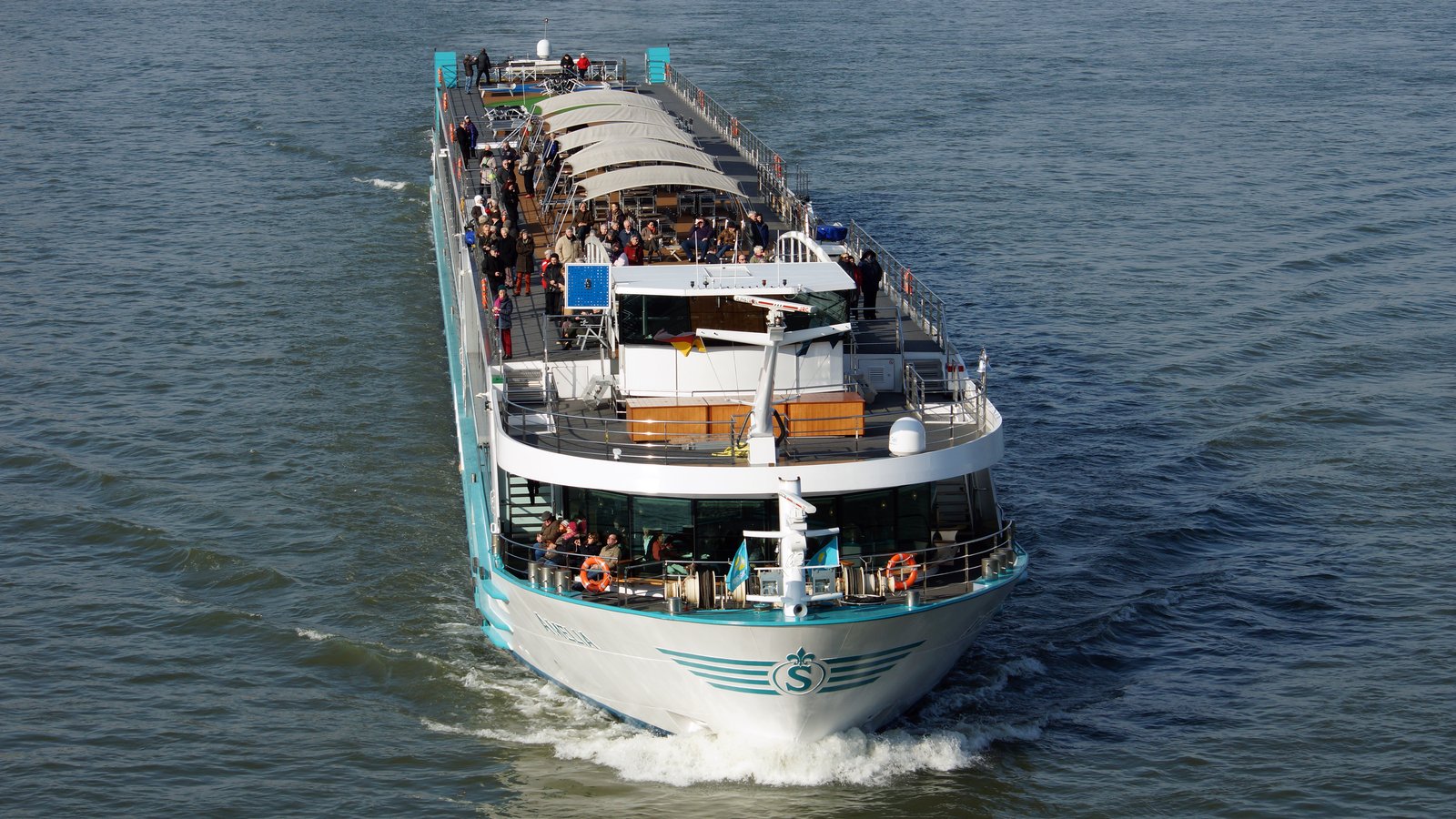
River ships hold 100-200 passengers. They dock in the center of towns. You walk off the gangway and you’re in the town square. The pace is slower. Port stops are longer. The atmosphere is more like a floating hotel than a resort.
What you get:
– Almost everything included (drinks, excursions, gratuities on most operators)
– Smaller group sizes (190 passengers vs 2,000-6,000)
– Port-immersive itineraries (Rhine castles, Danube capitals, Douro wine region)
– More day-by-day structure (you’re on the ship most nights, docking at a new town each morning)
What you don’t get:
– Broadway shows, ice rinks, rock climbing walls
– Multiple specialty restaurants
– Casino, photography packages, art auctions
– The variety of a 2,000-passenger resort
The river cruise experience is closer to a guided tour with comfortable accommodations than to the ocean cruise experience. That’s the point. It’s not for everyone, but for the right traveler, it’s the best version of cruising.
What ocean cruising actually is
Ocean ships range from 100-passenger luxury vessels to 6,000-passenger mega-ships. The average mainstream cruise holds 2,000-3,000 passengers.
What you get (mid-size ocean ship, Holland America / Princess / Celebrity tier):
– Multiple dining venues, usually with 1-3 specialty restaurants (extra charge)
– Live entertainment nightly (Broadway-style shows, comedians, musicians)
– Pools, hot tubs, fitness center, spa
– Casino, photography studio, art gallery, shops
– Itineraries that cover destinations not on rivers (Caribbean islands, Alaska coast, Mediterranean ports, Asia, transatlantic crossings)
– Port stops ranging from 6-12 hours, sometimes overnight in marquee cities
What you don’t get (vs. river):
– The intimacy of docking in town centers
– The “everything included” pricing
– The small-group feel of 190 passengers
The ocean cruise experience is closer to a resort that happens to move than to a focused tour. Different appeal, different pace.
Pricing reality check
This is where the comparison gets interesting. Per-day pricing can be misleading.
River cruise typical pricing (Viking, Tauck):
– $400-800 per person per day
– Almost everything included
– Total for 7-night Danube cruise: $3,000-5,500 per person
Ocean cruise typical pricing (Holland America, Princess):
– $150-400 per person per day base fare
– Add drinks package ($50-80/day), gratuities ($16/day), specialty dining ($30-50/visit), shore excursions ($50-200 each), and the per-day effective cost rises to $300-600
– Total for 7-night Caribbean cruise: $1,800-4,000 per person, before extras
On a straight per-day comparison, river cruising looks expensive. On a fully-loaded comparison, the gap narrows considerably. River cruising’s value proposition is the bundling: you don’t have to think about what’s not included because everything is.
Which itineraries work for each
River cruising excels at:
– European rivers (Rhine, Danube, Douro, Seine)
– Mekong (Vietnam/Cambodia)
– Nile (Egypt)
– Mississippi (limited options, smaller scale)
River cruising is the right answer for travelers who want a slow, port-heavy version of Europe or a specific Asian or African waterway. European rivers (Rhine, Danube, Douro, Seine) are the strongest and most-tested routes, with 7- to 10-night sailings that pair a city anchor with day excursions. The Mekong (Vietnam / Cambodia), the Nile (Egypt), and the Mississippi (smaller scale) are the named non-European options, each with its own shape and season. River cruising rewards travelers who want unpacking once and a strong base for day trips, and who accept the smaller cabins and quieter pace compared to ocean cruises. Skip river cruising for itineraries that need open-ocean sailing days.
Ocean cruising excels at:
– Caribbean (multiple island itineraries, year-round)
– Alaska (summer season only, glacier-heavy)
– Mediterranean (varied ports, summer peak)
– Northern Europe / British Isles (summer)
– Asia (Singapore to Tokyo, Singapore to Hong Kong)
– Transatlantic crossings (repositioning cruises, spring/fall)
– Antarctica, Galápagos, Norwegian fjords (expedition cruises)
Ocean cruising is the right answer for travelers who want variety, longer itineraries, and the option of expedition routes. Caribbean, Alaska, Mediterranean, Northern Europe / British Isles, and Asia are the named mainstream itineraries, with the Caribbean and Alaska being the most-tested for first-time cruisers. Transatlantic crossings and expedition cruises (Antarctica, Galápagos, Norwegian fjords) are the longer and more adventurous versions. Ocean cruising rewards travelers who want the ship as a destination in itself, who want port variety, and who want options for warm-weather and cold-weather itineraries across the year. Skip ocean cruising for travelers who want slow, intimate port-hopping.
There’s almost no overlap. If your dream is “see Italy,” river cruising won’t get you there (the Italian rivers aren’t cruise-ready). If your dream is “see the inside of the Parthenon,” a Mediterranean ocean cruise stops in Athens.
Physical demands
Both are accessible, but they differ in subtle ways.
River cruising:
– More walking on cobblestones in town centers
– Long days in port (8+ hours walking)
– Smaller ship means smaller cabins, but generally no stairs between decks
– Sea days are rare on rivers (the water is calm)
– Best for: travelers who want to walk, see, and absorb
Ocean cruising:
– Walking varies by port (Mediterranean cobblestones vs. Caribbean beaches)
– Sea days are common (full days on the ship with no port)
– Larger ship means larger cabins but more walking on board
– The ship itself can be a destination (pools, shows, dining)
– Best for: travelers who want a mix of activity and relaxation
The age thing nobody wants to say
River cruises skew older than ocean cruises. The average passenger on a Viking Danube sailing is 65+. The average on a Caribbean Royal Caribbean sailing is closer to 50.
This matters because the social experience on board is shaped by the demographic. River cruises have a quieter, more conversational social scene. Ocean cruises on bigger ships have a wider age range and more energy. Neither is better, but if you want to be among peers, the average age of the sailing matters.
The decision framework
If you’re still torn, answer these three questions:
1. Where do you want to wake up each morning?
– A different European town every day ? river
– A new port every 2-3 days, sea days in between ? ocean
2. What do you want to do on board in the evenings?
– Sit on deck, read, talk with other passengers, drink wine ? river
– See a show, eat at a specialty restaurant, walk around a big ship ? ocean
3. What’s your per-day budget all-in?
– $400-600 per day ? either works, depending on itinerary
– $200-300 per day ? ocean cruising only
– $700+ per day ? river cruising (you’ll appreciate the bundling)
What I’d actually book
If you’re over 60 and have never cruised:
Start with a 7-night river cruise on the Danube (Viking, Tauck, or AmaWaterways). Vienna to Budapest or reverse. It’s the classic introduction to river cruising, the ports are spectacular, the pace is right, and the “everything included” pricing means you don’t have to think.
After that, try a 7-night Mediterranean ocean cruise (Holland America, Princess, or Viking Ocean). You’ll have a basis for comparison, and you’ll either love it or know that ocean cruising isn’t for you.
Avoid on the first cruise:
– Long ocean cruises (12+ nights): too much time to be on a ship you’ve never been on
– Expedition cruises (Antarctica, Galápagos): expensive, physically demanding, and you don’t yet know if you like cruising
– Mega-ships (6,000+ passengers): overwhelming on a first cruise
The bottom line
River cruising and ocean cruising aren’t competing options. They’re different products that solve different problems.
River cruising is the right answer if you want the destinations themselves to be the trip. Ocean cruising is the right answer if you want the ship to be part of the destination, with port stops as variety.
Pick the one that matches what you actually want. Don’t book a river cruise because someone told you it’s “more refined.” Don’t book an ocean cruise because the ship has more to do. Pick the experience that fits how you want to spend your vacation time.
Browse G Adventures small-group tours
This article contains affiliate links to Viking Cruises and G Adventures. If you book through these links, we may earn a commission at no extra cost to you. Our editorial recommendations are independent of affiliate relationships. See our affiliate disclosure for details.
Last reviewed: July 2026. Pricing, ship details, and itinerary availability verified at time of writing. Confirm details on each cruise line’s site before booking.