Antarctica is the trip you save for. The cost ($10,000 to $25,000+ per person) makes it the most expensive trip most travelers will ever book, and the experience justifies it in a way that is hard to explain until you have been there. It is the closest thing to another planet that most travelers will experience in their lifetime. The air is different. The light is different. The wildlife has no fear of humans because humans have not been here long enough to be a threat.
This guide covers what Antarctica costs, what the trip actually involves day to day, who should and should not go, and which operators are worth trusting with this kind of money.
Browse Antarctica tours on Viator · Browse on GetYourGuide
What the trip actually costs
The honest range for a 10 to 12 night Antarctic expedition cruise in the 2026 to 2027 season is $10,000 to $25,000 per person, double occupancy. That covers the ship, all meals, all excursions, the standard expedition clothing loan, and transfers in Ushuaia. It does not cover flights from your home city to Buenos Aires or Santiago.
Ushuaia is the right gateway city for an Antarctic expedition and the place most travelers spend 1 to 2 nights before boarding. The city sits at the southern tip of Argentina on the Beagle Channel and is the world’s southernmost city of any size. The Tierra del Fuego National Park rewards a half-day before the cruise starts, with the End of the World train being the headline activity. Ushuaia is also where most expedition operators do their pre-cruise briefings and gear checks. Travelers who want a quieter gateway can fly to Punta Arenas in Chile and board from there, though Ushuaia is the more common version.
Breakdown of what you are paying for in a $15,000 mid-range cabin on a 10-night Antarctic expedition:
- Ship charter and crew: $4,000 to $5,500. The cost of operating an ice-strengthened expedition ship with 100 to 200 passengers, a crew of 80 to 120, and a small expedition staff of 8 to 15. This is the largest cost component.
- Permits and IAATO fees: $500 to $800. The Antarctic Treaty requires every paying passenger to pay into the IAATO fund and the IAATO visitor fee structure. These are non-negotiable and built into every operator’s pricing.
- Fuel, food, and consumables: $1,500 to $2,500. Operating in polar waters is fuel-intensive. Fresh food is flown to Ushuaia. Specialty expedition gear (kayaks, Zodiac engines, snowshoes) is expensive.
- Profit margin: $3,000 to $8,000. Antarctic expeditions are not cheap to run, but they are also genuinely profitable for the operators who do it well. The premium pricing reflects the limited supply (a small number of berths available each Antarctic summer).
What is not in the price: international flights to Buenos Aires ($1,500 to $2,500 round-trip from the US), pre-cruise hotel in Buenos Aires ($200 to $500 for two nights), travel insurance (essential for Antarctica, typically $300 to $600), tips for the crew ($200 to $400 per person in cash at the end), and any optional activities (kayaking supplement $500 to $1,000, camping overnight $300 to $500, mountaineering $1,500+).
Total realistic trip cost from the US East Coast: $14,000 to $30,000 per person.
What you actually do for 10 to 12 days
The honest day-by-day on a standard Antarctic Peninsula expedition:
The Antarctic Peninsula is the right destination for a first Antarctic expedition and what most 10- to 12-day trips cover. The peninsula is the northernmost reach of the Antarctic continent and the most accessible for cruise-based visits. The standard day-by-day includes the Drake Passage crossing, the South Shetland Islands (with King George Island as the main landing), and 4 to 5 days of Peninsula landings at penguin colonies, research stations, and iceberg-filled bays. Travelers who want a longer expedition can extend to the Falklands and South Georgia, which add 7 to 10 days and dramatically increase the wildlife. The Peninsula rewards travelers who choose a small-ship expedition (under 200 passengers) and who are prepared for real weather variability.
- Days 1 to 2: Crossing the Drake Passage. The 600-mile open-water crossing from Ushuaia to the Antarctic Peninsula is famously rough. Most ships take 36 to 48 hours. The Drake has earned its reputation as the roughest sea crossing on the planet. Pack seasickness medication.
- Days 3 to 9: The Antarctic Peninsula proper. Daily landings via Zodiac (the inflatable boats that get you to shore). Two landings per day, typically morning and afternoon. Each landing is 1 to 3 hours on land. Between landings, the ship repositions to the next bay. Lectures on board in the evenings.
- Days 10 to 12: Crossing back. Another 36 to 48 hours of Drake Passage, often calmer than the crossing south but not guaranteed. Disembark in Ushuaia.
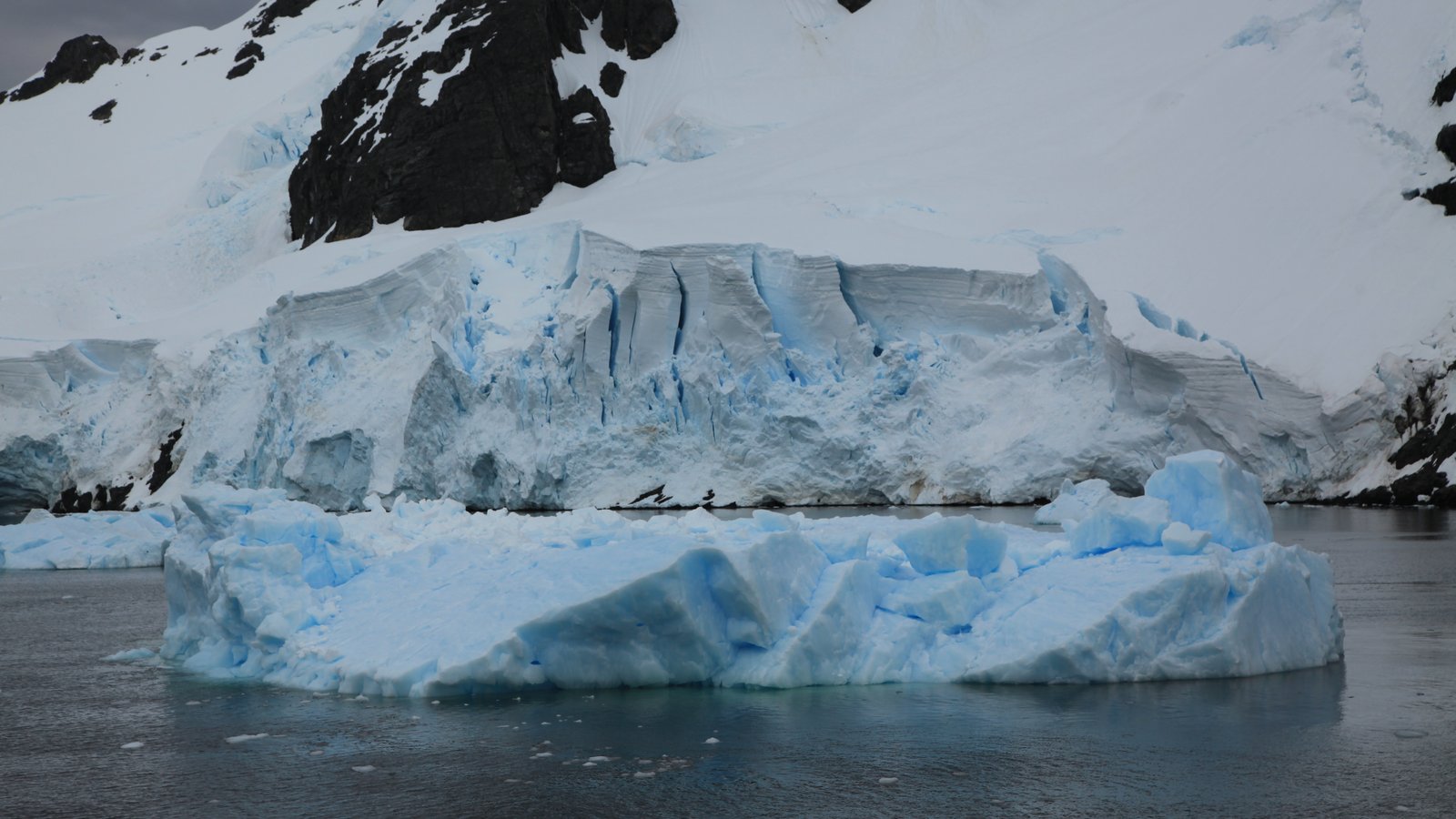
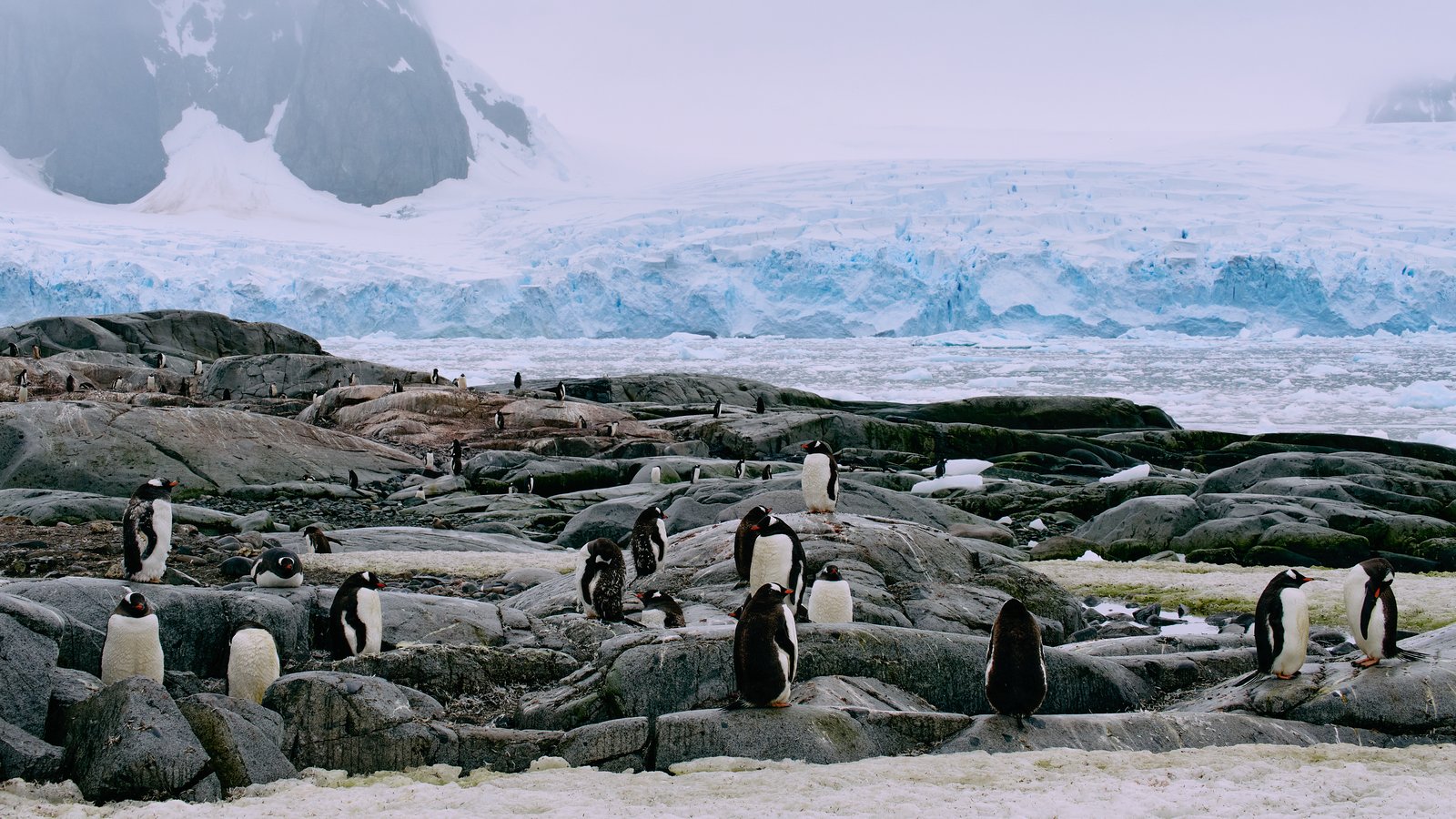
The landings themselves are the point. You walk on the Antarctic continent (or the peninsula, which is technically part of the continent). You see penguin colonies (often tens of thousands of birds at a single rookery). You see seals on ice floes. You may see humpback whales, minke whales, and orcas. You may see glaciers calving. You walk past research stations.
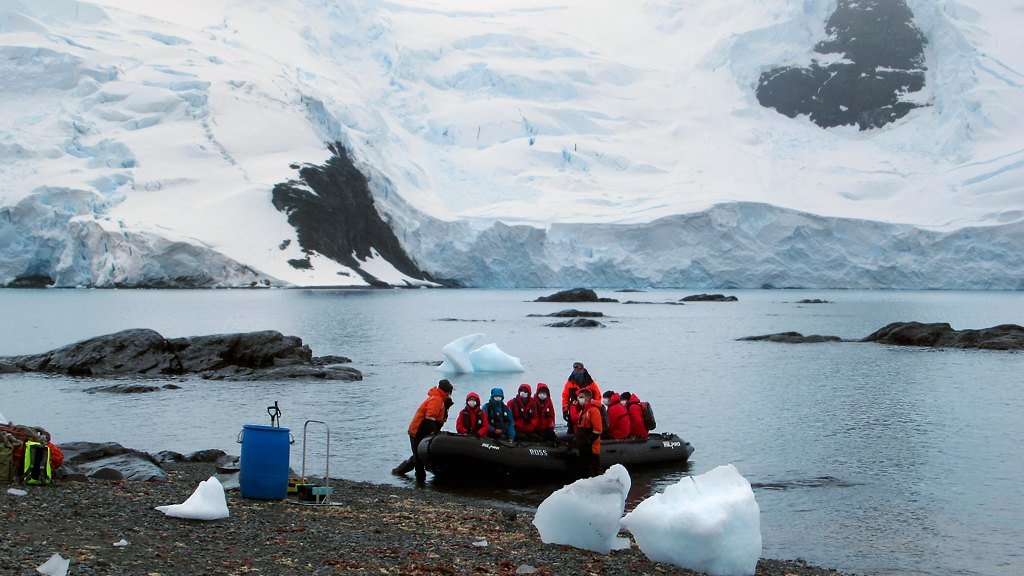
The day on the ship is: breakfast, lecture, landing, lunch on the ship, landing, lecture, dinner, lecture, sleep. It is active but not strenuous. Most travelers gain a few pounds on board because the food is excellent.
The expedition vs. cruise distinction
This is the most important distinction to understand before you book. Antarctic travel falls into two categories:
Expedition ships. 100 to 200 passengers. 8 to 15 naturalists, scientists, or historians on board. Daily Zodiac landings. The naturalist team is the value. They give lectures on glaciology, Antarctic history, penguin biology, and the geopolitics of the continent. They lead every landing and identify every species. The ships are functional, not luxurious. Cabins are 120 to 250 square feet.
Cruise ships. 500 to 4,000 passengers. Few or no naturalists. Limited or no Zodiac landings. The Antarctic experience is mostly viewing from the deck or from shore excursions organized in advance. The ships are luxurious. Cabins are 200 to 600 square feet.
Do not book an Antarctic cruise ship if your goal is the Antarctic experience. The cruise ships do not land passengers as often and the experience is dominated by the ship, not the destination. The expedition ships are the right choice for anyone who wants to actually be in Antarctica.
The major expedition operators:
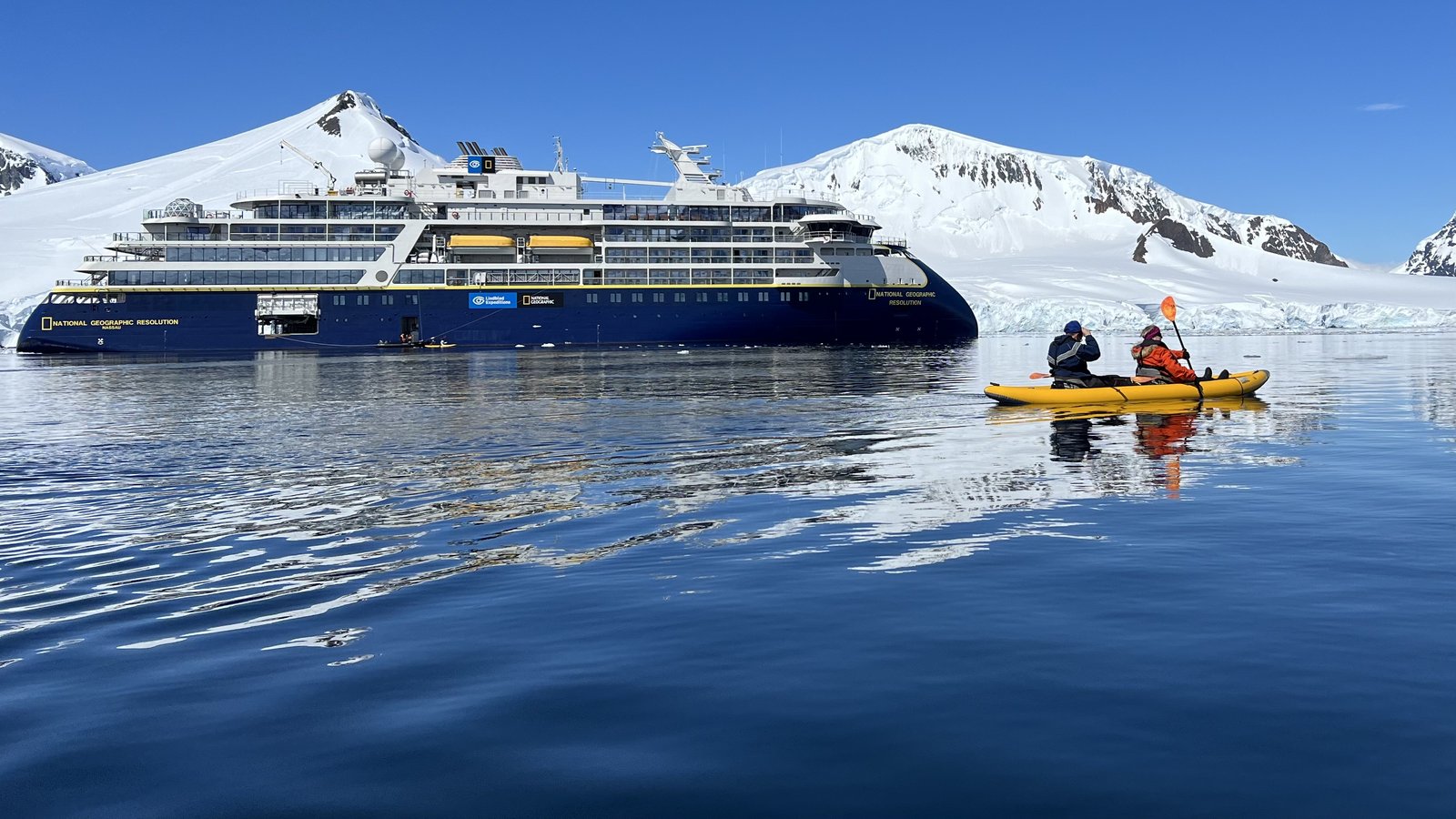
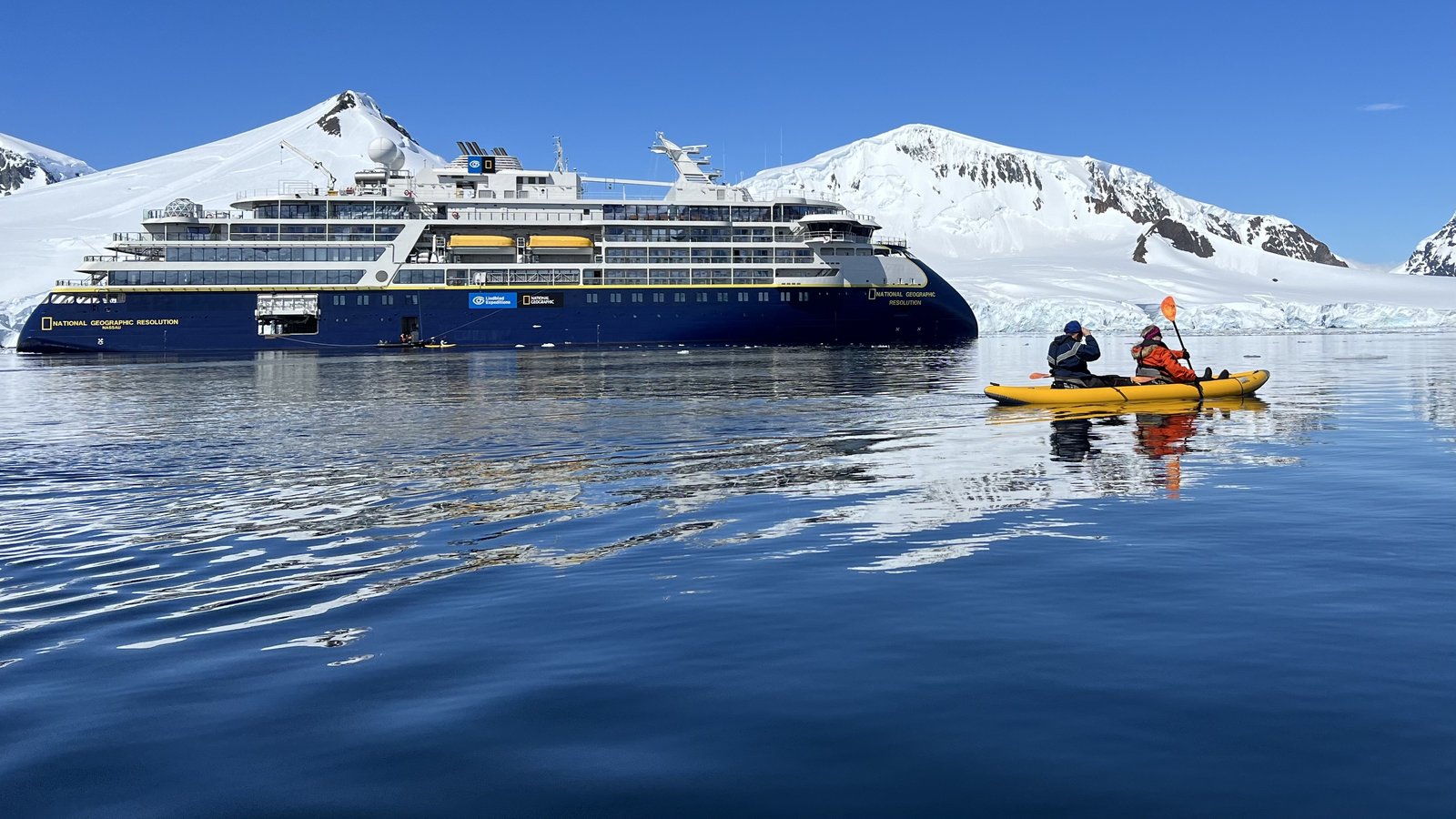
- Lindblad Expeditions with National Geographic: The editorial pick. Operates the National Geographic Resolution and National Geographic Endurance, purpose-built polar-class ships. 138 passengers each. The strongest naturalist team in the industry. Higher price ($18,000 to $35,000 per person).
- Ponant: French luxury expedition line. Le Commandant Charcot is a new icebreaker-class ship with 270 passengers. Ponant has a serious naturalist team and good itineraries.
- Antarctic XXI: Chilean operator focused specifically on Antarctic fly-in/cruise-out programs. Smaller ships, lower-key experience.
- Quark Expeditions: Mid-tier expedition line with a wide range of ships and itineraries.
- Hurtigruten: Norwegian line with expedition-capable ships, including the MS Roald Amundsen and MS Fridtjof Nansen.
The Drake Passage reality
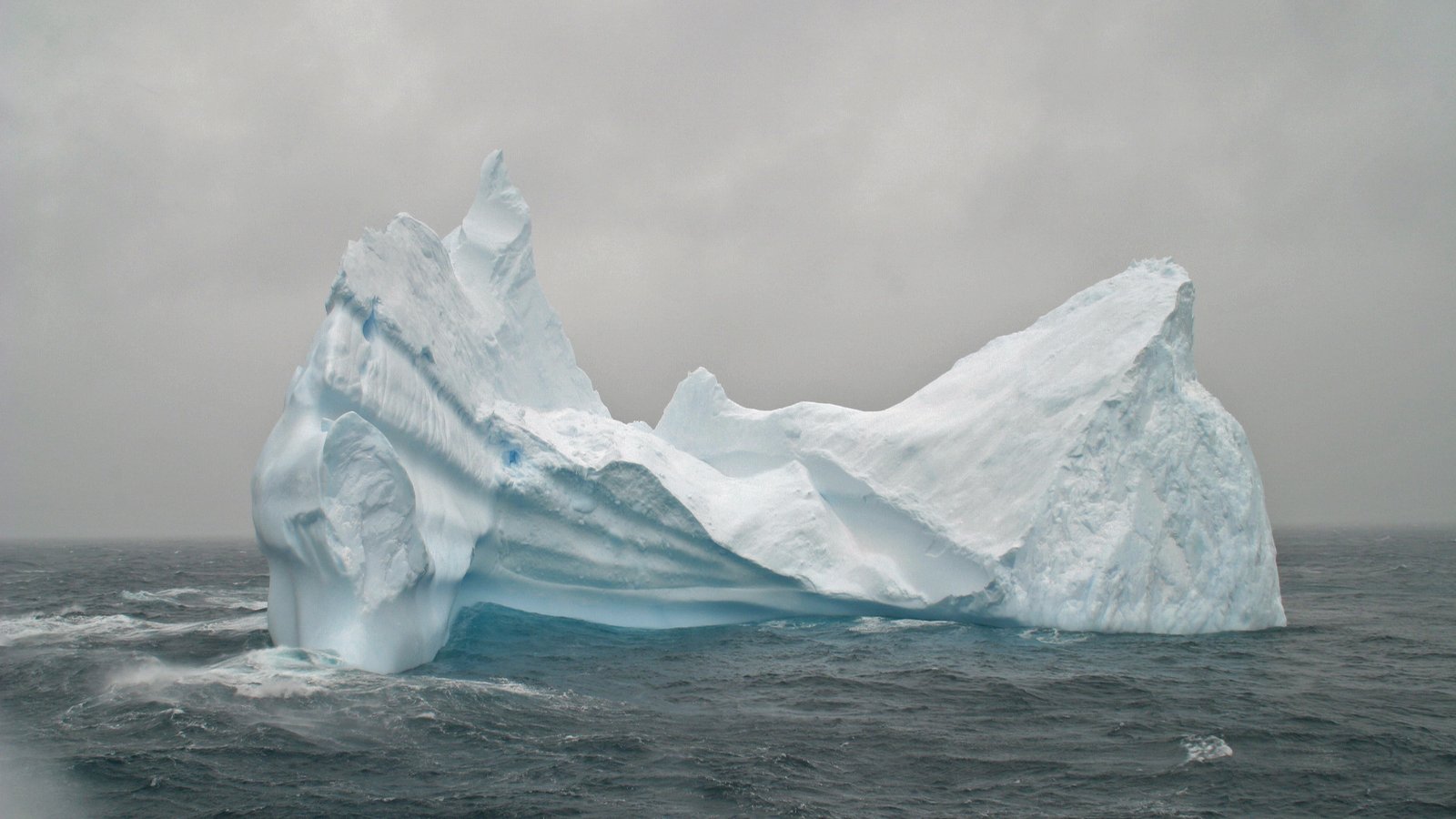
The Drake Passage crossing is the single most-asked-about part of an Antarctic trip. Here is the honest version:
- Duration: 36 to 48 hours each way. Most ships take about 40 hours south and 36 hours north.
- Roughness: Variable. Some crossings are genuinely rough (15 to 20 foot swells). Some are calm. There is no way to predict in advance.
- Seasickness: If you are prone to seasickness, take medication. The most effective is a scopolamine patch (prescription required). Most naturalists bring patches and Dramamine. Roughly half of passengers take something for the Drake.
- The flying option: A few operators offer a “fly the Drake” program. You take a 2-hour flight from Punta Arenas, Chile to King George Island (South Shetland Islands), and start your Antarctic experience there, skipping the sea crossing. This is more expensive ($3,000 to $5,000 supplement) and weather-dependent (delays are common). Not all operators offer it.
If your budget allows the supplement and you are prone to seasickness, the flying option is worth it. If you can handle the sea crossing, it is a memorable part of the experience (the albatross that follow the ship across the Drake are not visible from the air).
Physical demands
This is where Antarctica surprises people. The trip is less physically demanding than people expect. Most passengers are in their 50s to 70s. Many have limited hiking experience. The standard day on shore involves:
- Walking 1 to 2 miles on uneven terrain (snow, rocks, ice, mud)
- Climbing in and out of a Zodiac via a small step. The crew helps.
- Standing on shore for 1 to 3 hours in cold weather. Temperatures are typically 20 to 40 F.
- Optional longer hikes for those who want them. Most landings have a short route and a longer route.
If you can walk a few miles on uneven ground without serious difficulty, you can do the standard Antarctic experience. If you have severe mobility limitations, talk to the operator before booking. Some operators offer accessibility programs with shorter landings and additional Zodiac support.
The real physical challenge is the Drake Passage crossing, not the landings.
When to go
The Antarctic season runs November to March, with peak season December to February.
- November: Early season. Less wildlife (penguins nesting, fewer whales). Cheaper. Good for travelers who want fewer crowds and don’t mind seeing less wildlife.
- December: Mid-early season. Penguins nesting, eggs hatching. Daylight nearly 24 hours. The most photogenic snow conditions.
- January: Peak season. Penguin chicks hatching, whales returning, everything active. Most expensive.
- February: Peak season. Whale sightings at their best. Penguin colonies at their most active. Crowded.
- March: Late season. Cooler, some snow cover, whales departing, penguins fledging. Cheaper than peak. Often considered the best month by experienced travelers.
For first-timers, December or January is the right choice. The combination of weather, daylight, and wildlife is at its peak. The premium pricing is worth it.
What to skip
Three things look essential but are not, and you should consider skipping:
Mountaineering add-ons. Most expedition ships offer a 1 to 2 day optional mountaineering program on the Antarctic Peninsula for an extra $1,500 to $3,000. You need prior climbing experience. If you don’t already climb, skip it. The standard landings are the experience.
Plunge-into-Antarctic-waters programs. A few operators offer the “polar plunge” where you jump into 28 F water. Memorable for 5 minutes, miserable for 30. Optional, often free or cheap, but skip unless you really want to.
Premium cabin upgrades. Most Antarctic expedition ships have standard cabins in the 120 to 200 square foot range and premium suites in the 250 to 400 square foot range. The standard cabins are functional. The upgrade is real estate and a slightly better window. Skip the upgrade and spend the money on a longer itinerary instead.
What to bring
Three things most first-timers forget:
- Layers. The ship is warm. The landings are cold. You will go from 70 F indoors to 30 F outdoors multiple times per day. Base layers, fleece, a waterproof shell. The ship loans parkas (most operators). Bring your own layers.
- Waterproof pants. Essential for Zodiac landings where you sit in spray. Most travelers buy cheap waterproof pants before the trip and discard them at the end.
- Seasickness medication. Bring what works for you. The ship will have basic medication but bring your preferred option.
Your expedition will loan you a parka, waterproof boots, and basic gear. Bring your own thermal layers, gloves, hats, sunglasses (Antarctic sun glare is intense), and any prescription medication.
Bookings and timing
Antarctic expeditions sell out 12 to 18 months in advance for the December to February peak season. For 2027 and 2028 Antarctic seasons, you should book by mid-2026 if you want the best cabins.
- 12 to 18 months out: Best cabin selection, best pricing
- 9 to 12 months out: Most cabins still available, less choice
- 6 to 9 months out: Limited cabin selection, often only premium categories remain
- Less than 6 months: Last-minute deals possible but inconsistent. Don’t count on it.
For the 2027 Antarctic season specifically, the smart booking window is now through October 2026.
The bottom line
Antarctica at $15,000 to $20,000 per person for a 10 to 12 night expedition is the best value per dollar of any trip you will ever take. You will see things no other vacation provides. You will be changed by the trip in ways you cannot predict. The cost is real, but the return is permanent.
If you can afford it, do it. If you cannot afford it this year, save for next year. The penguins will be there.
Browse Antarctica tours on Viator · Browse on GetYourGuide
This article contains affiliate links to Viator and GetYourGuide. If you book through these links, we may earn a commission at no extra cost to you. Our editorial recommendations are independent of affiliate relationships. See our affiliate disclosure for details.
Research note: Antarctic expedition pricing and departure calendars were reviewed in Summer 2026. Lindblad/National Geographic and other operator specifics should be verified directly at the time of booking. The fly-the-Drake option is only available on selected departures. IAATO operator membership should be confirmed for any operator mentioned.