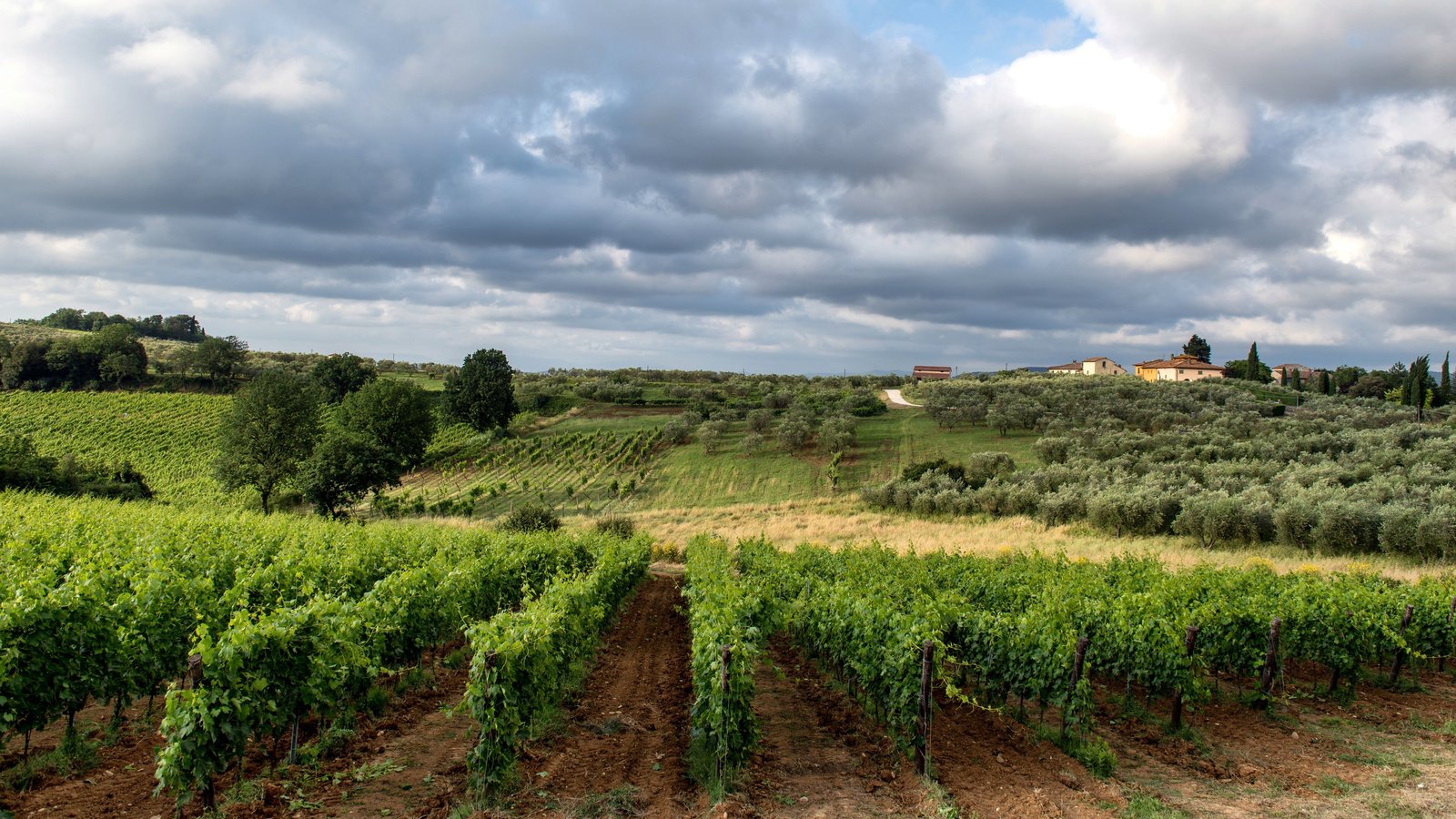
Most lists of day trips from Florence lead with the same three: Siena, Pisa, San Gimignano. They’re fine. They’re also what every tour bus in Tuscany hits on the same day, at the same time, with the same gift-shop stop.
This list is for the second-trip visitor, or the first-trip visitor who wants to skip the obvious three and discover what’s actually within reach of Florence by train or short drive. Every entry here is bookable, most are 1-3 hours from the city, and all of them are the kind of experience that makes the trip stick.
Browse all Florence experiences on Viator · Browse on GetYourGuide
Truffle hunting in San Miniato
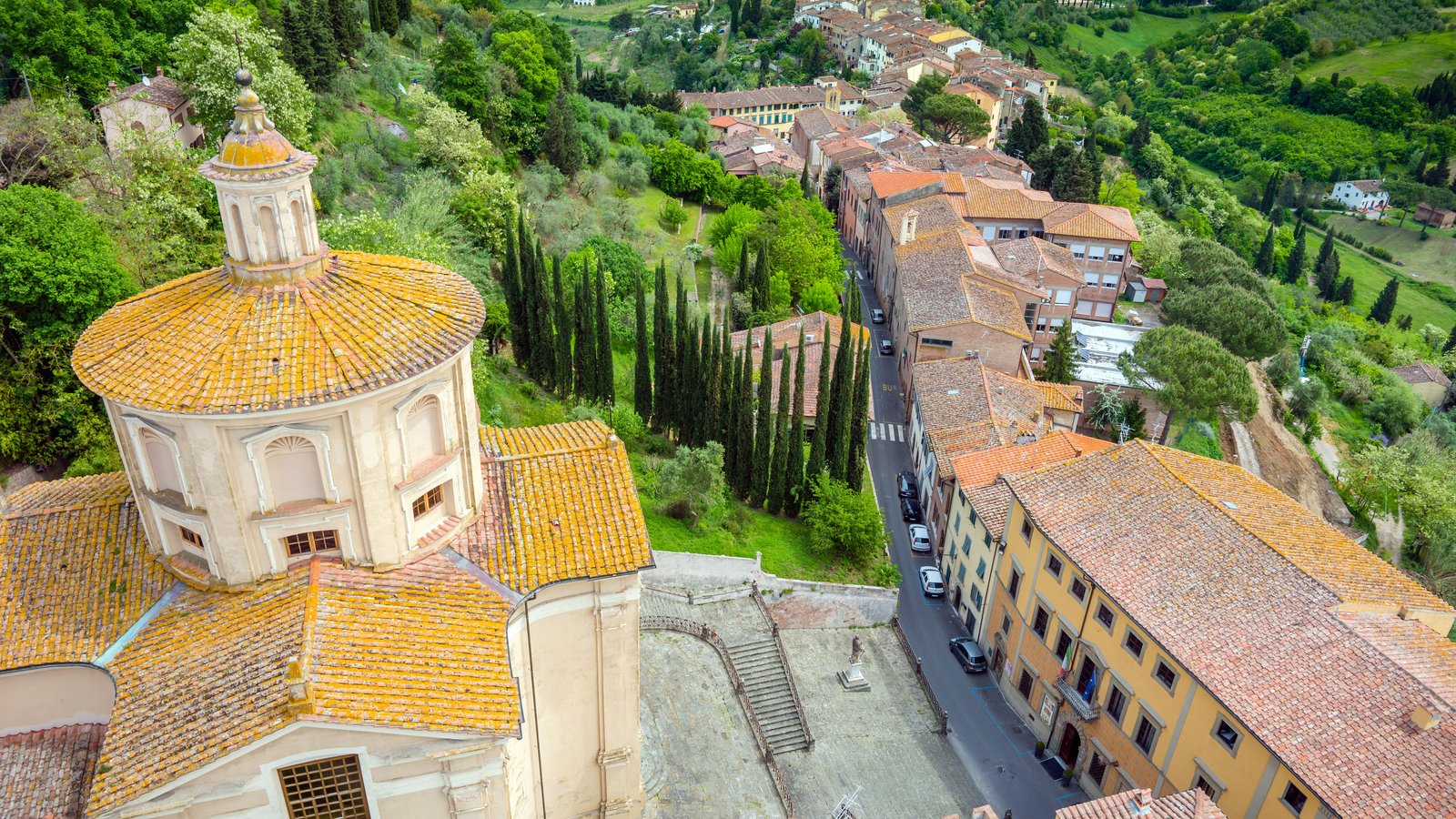
San Miniato sits between Florence and Pisa, in the hills where Tuscany’s white truffles grow. The town is small, the hills are quiet, and the truffle-hunting tradition here goes back centuries.
A real truffle-hunting experience means a morning walk through oak and hazelnut groves with a local hunter and his trained dog. The dog finds the truffle, the hunter extracts it, you taste it within the hour shaved over fresh tagliatelle at the family farm.
What to book: Half-day tours typically run 4 hours including the hunt, the farm lunch, and wine pairing. They leave San Miniato (about 1 hour from Florence by car or train + short transfer). The truffle season is October through December. Outside that window, the experience shifts to summer truffle (less aromatic) or the experience isn’t offered.
What it costs: 80-150 EUR per person, lunch and wine included.
Book a San Miniato truffle hunt
San Miniato is the right answer for travelers who want a Tuscan truffle-hunting experience that’s reachable from Florence in a half-day. The town sits between Florence and Pisa and is the heart of Tuscany’s white truffle season in autumn. A morning hunt with a local trifolau and his dog, followed by lunch in San Miniato with the truffles shaved over pasta, is the right shape for the visit. The town itself rewards a slow walk and a stop at the market if the season aligns. Skip the San Miniato hunt in summer (truffles are out of season) and plan for October or November if truffles are the goal.
Carrara marble quarries
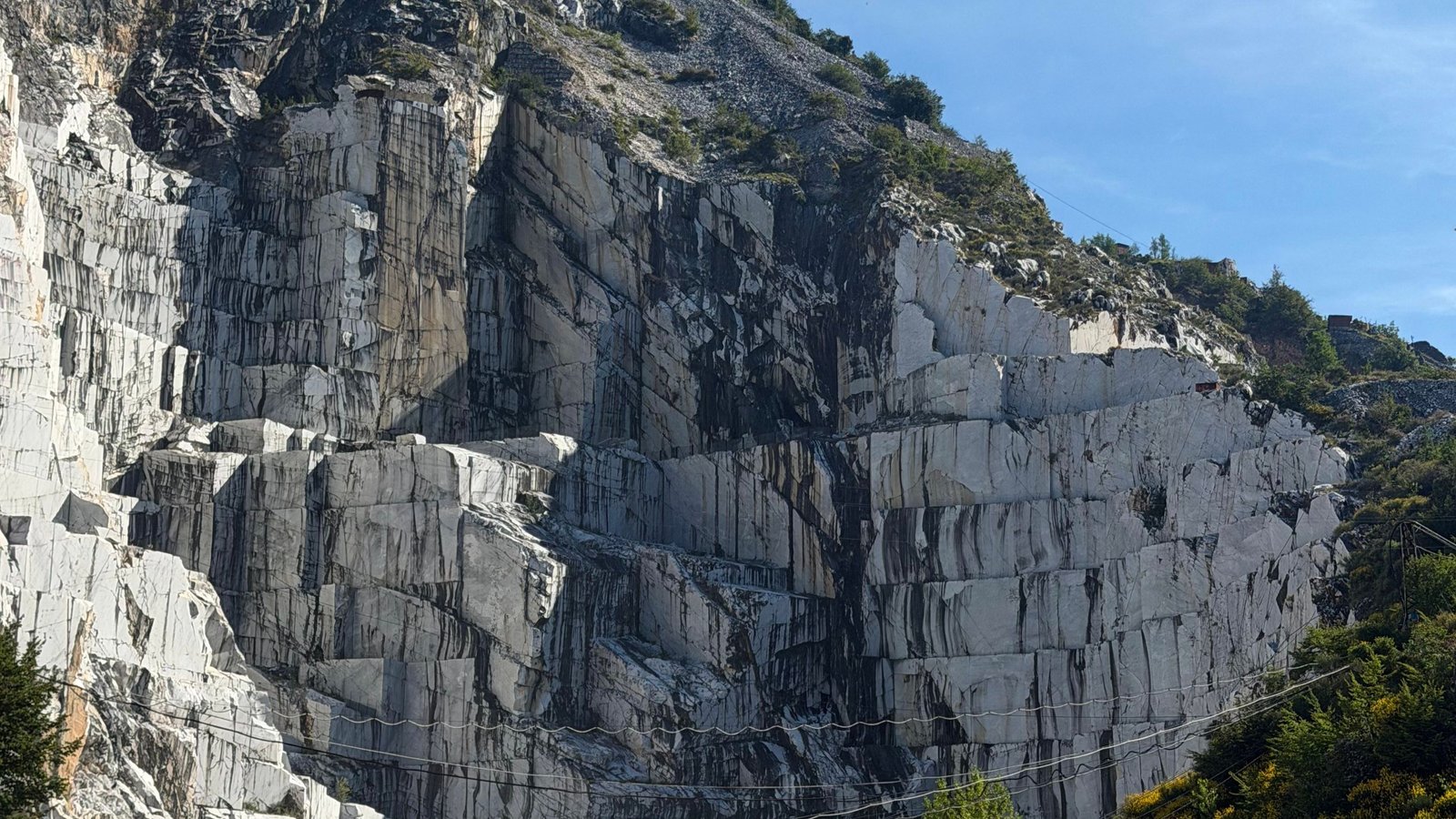
The white marble that Michelangelo carved David from is still being cut from the same mountain above Carrara. The quarries are an hour and a half from Florence, accessible by train (to Massa Centro) plus a short local bus or taxi.
Most visitors to Carrara see the town and the beach. Few go up into the active quarries. The ones who do describe it as one of the more unexpected things they’ve done in Italy.
The quarries themselves are vast open pits carved into the mountainside over 2,000 years. White marble dust fills the air. The scale is hard to describe and impossible to photograph in a way that captures it.
What to book: Guided quarry tours (4-6 hours) include transport from Carrara town, an ATV or 4×4 ascent into the upper quarries, and a marble workshop visit. Some operators combine with a visit to a sculptor’s studio where you can try carving a small piece.
What it costs: 60-120 EUR per person for the tour; add 30-50 EUR for a sculpture workshop.
Carrara is the right answer for travelers who want to see where the marble for Michelangelo’s David and the Pantheon came from. The marble quarries sit in the Apuan Alps above the town and have been worked for over 2,000 years. A guided tour of the active quarries is the right shape for the visit, with the white-marble cliffs visible from the main road as the dramatic backdrop. The town of Carrara itself rewards a slow lunch and a stop at one of the marble workshops in the lower town. Skip Carrara for travelers who want a beach day — the coast at Marina di Carrara is functional, not scenic.
Saturnia thermal springs
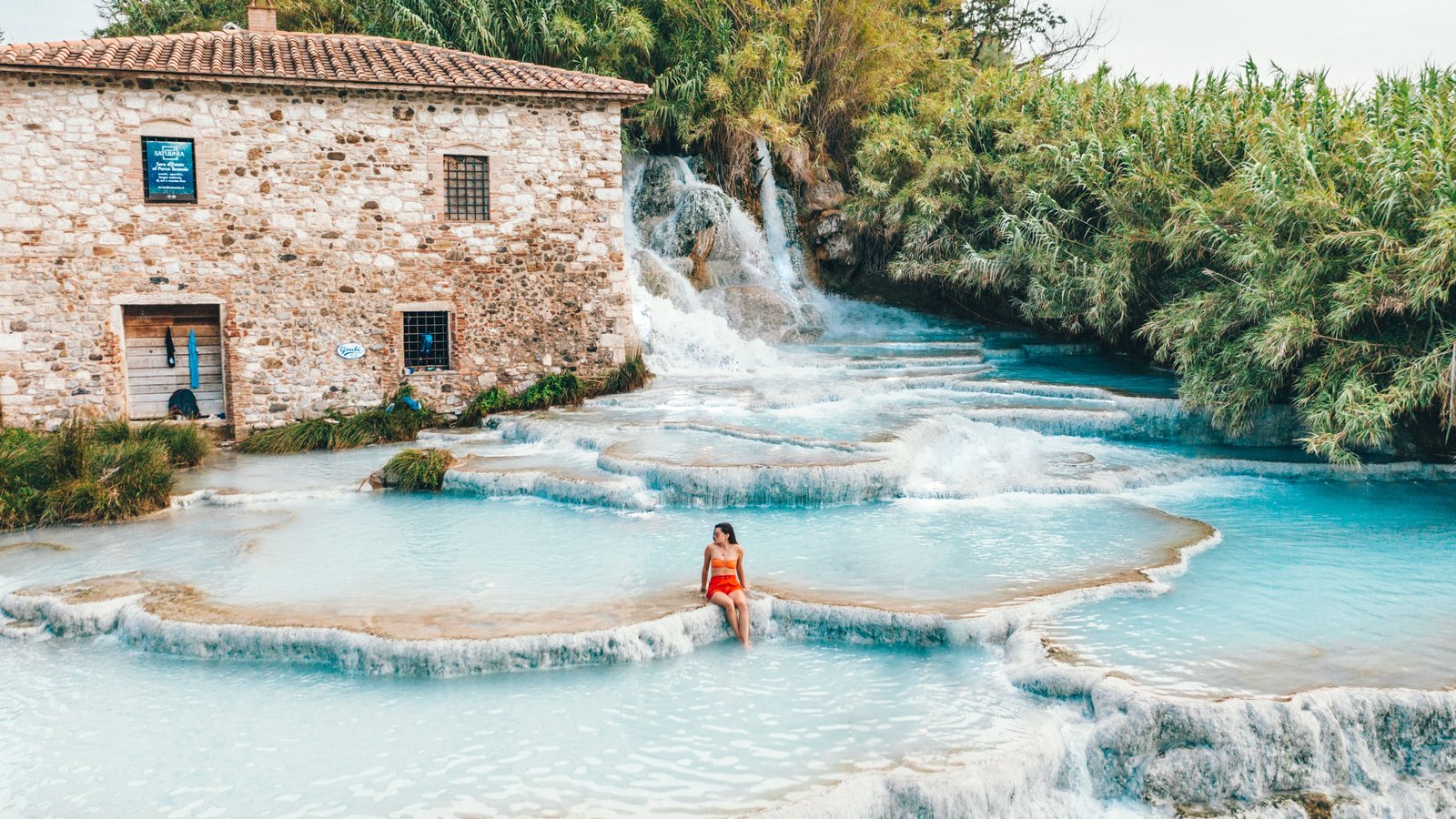
Saturnia is three hours south of Florence by car, in the Maremma region of southern Tuscany. The thermal springs there have been flowing since Roman times and are free to access.
The main pool, called Cascate del Mulino, is a series of travertine terraces carved by the hot water over millennia. The water runs at 37.5°C / 99.5°F year-round. You can swim in the morning in October.
The springs are technically free, but most visitors stay in Saturnia for a night to make the drive worthwhile. There’s a small resort hotel adjacent to the springs (Terme di Saturnia), and a few agriturismo options within 30 minutes.
What to book: A guided day-trip from Florence including transport, lunch in a Maremma village, and 2-3 hours at the springs. Driving yourself is faster and more flexible but requires a car.
What it costs: 80-180 EUR per person for a guided day trip; 0 EUR for the springs themselves.
Saturnia is the right answer for travelers who want a thermal-springs experience that’s a real day-trip from Florence (about 2.5 hours south). The Cascate del Mulino (the free, open-air thermal pools) are the strongest experience: sulfurous hot spring water cascading into travertine pools, with no entrance fee and no facilities. The thermal waters are warm year-round and the pools are most enjoyable in cooler months when the air temperature contrasts with the hot water. A morning drive from Florence, a few hours at the pools, and a slow lunch in the town of Saturnia is the right shape. Skip the resort thermal-bath version (Terme di Saturnia Spa & Golf) unless you want the spa-and-pool-day experience.
Civita di Bagnoregio
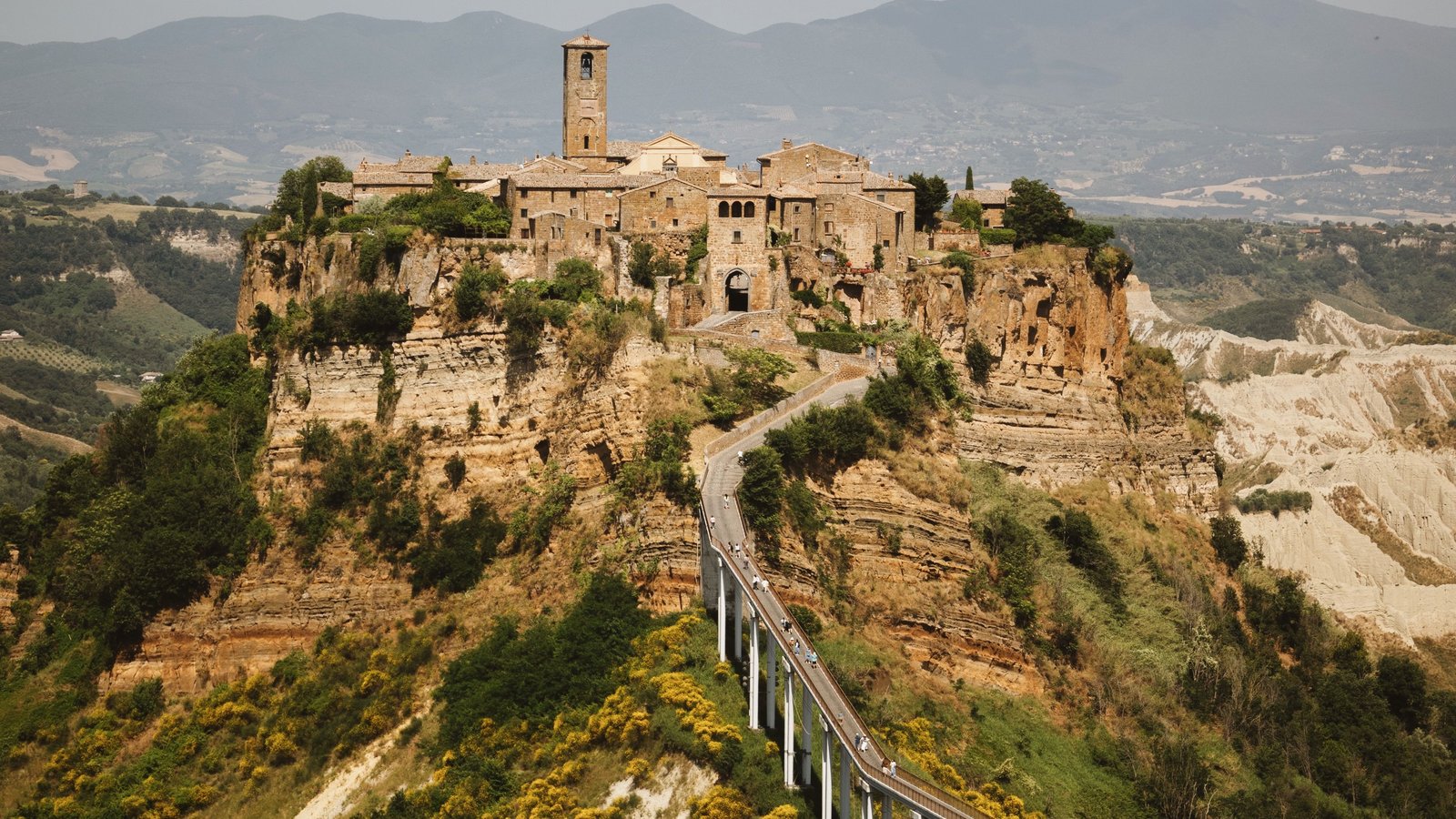
Civita is a hilltop village in Lazio, accessible from Florence in about two hours by car or train+bus. It’s connected to the rest of the world by a single footbridge.
The village has roughly 10 permanent residents. It sits on a volcanic tuff outcrop that is slowly eroding. In a few centuries, it will fall into the valley below. Visit it while you can.
What makes Civita worth the trip isn’t the village itself, which is small and quiet and photogenic in the way every Italian hill town is photogenic. It’s the approach: the long footbridge, the empty streets, the cats. Most visitors spend 2-3 hours here before continuing to Orvieto or returning to Florence.
What to book: There are no formal tours of Civita. The experience is the walk. Lunch at one of the small trattorias in the village, then the walk back across the bridge.
What it costs: 0 EUR for the walk across the bridge (5 EUR per person for the footbridge maintenance fee). 20-40 EUR for lunch.
Civita di Bagnoregio is the right answer for travelers who want a hilltop village experience reachable from Florence in under 2 hours. The town sits on a tufa hilltop in the Lazio region and is connected to the mainland by a single pedestrian bridge. Cars and most vehicles are not allowed in the village, which makes it a slow-walk experience. Civita rewards travelers who come for the lunch and stay for the views, with the surrounding Tiber valley as the dramatic backdrop. The town gets crowded on weekends and in summer; a weekday morning is the right shape. Skip Civita for travelers with mobility issues — the bridge climb is steep and the village streets are all on foot.
Montepulciano and Pienza wine loop
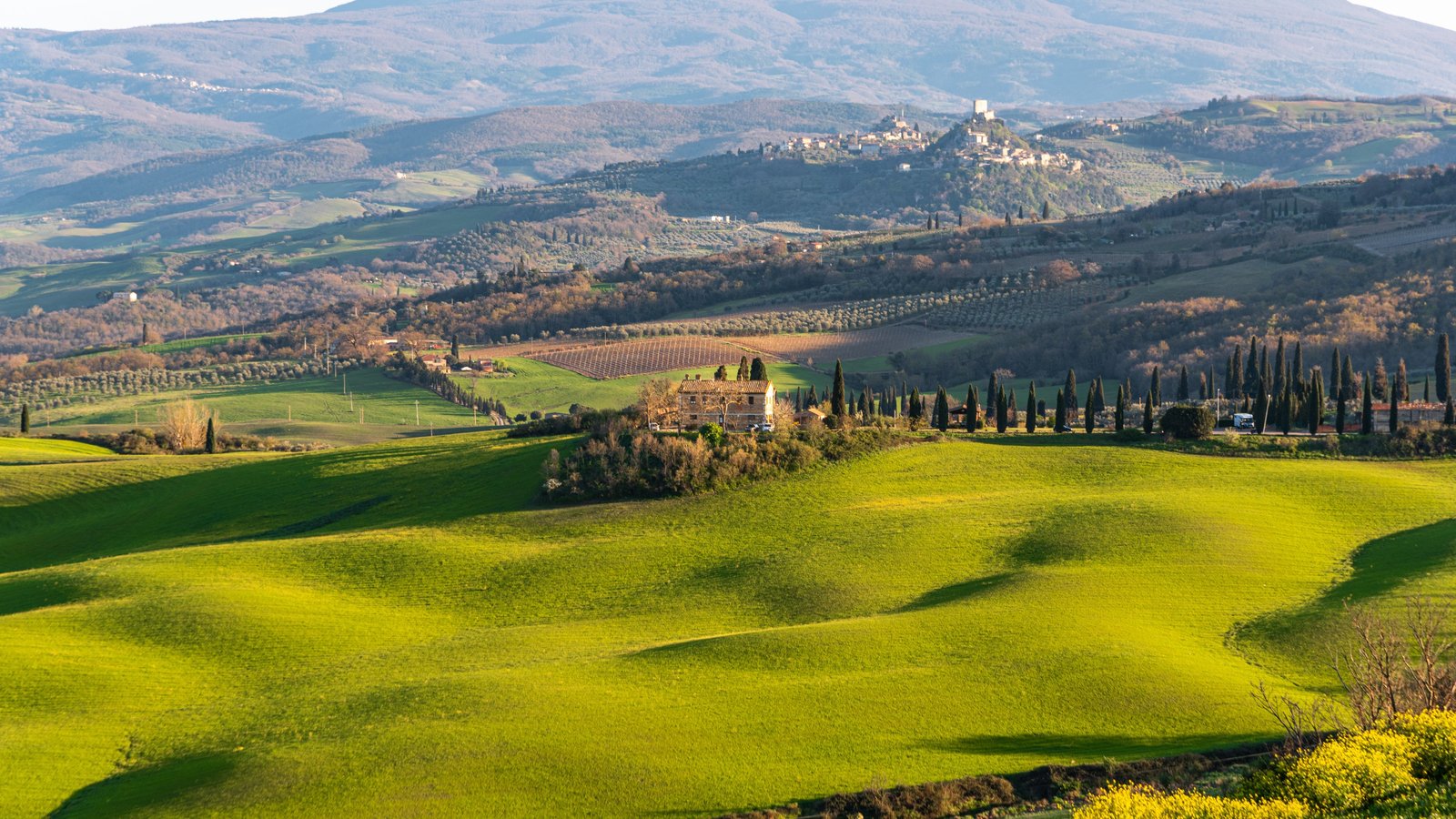
Montepulciano and Pienza sit 90 minutes south of Florence, in the Val d’Orcia. Both are small hill towns; both produce wine (Montepulciano is famous for Vino Nobile; Pienza for Pecorino cheese and Rosso di Montalcino).
The wine loop means driving between 3-5 wineries in a single day, tasting, having lunch at one of them, and ending in either town for dinner. This is the Tuscany most people picture when they picture Tuscany.
What to book: A guided wine tour from Florence with a driver (don’t drive yourself if you want to actually taste the wine). Most operators include 3-4 winery visits, a vineyard lunch, and time in both towns. 8-10 hour day.
What it costs: 150-300 EUR per person for a small-group tour including tastings and lunch.
Book a Montepulciano wine tour
Montepulciano and Pienza are the right answer for travelers who want a Tuscan wine-country loop south of Florence. Both towns sit in the Val d’Orcia, the rolling-hills landscape that is the most-photographed version of Tuscany. Montepulciano is known for Vino Nobile di Montepulciano (Sangiovese-based); Pienza is known for Pecorino cheese and the slow Renaissance town layout designed by Pope Pius II. The loop rewards travelers who pick one or two wineries for tastings and leave room for a long lunch in either town. Skip the weekend version of this loop — both towns get crowded with day-trippers from Florence and Rome.
Cortona and the Etruscan tombs
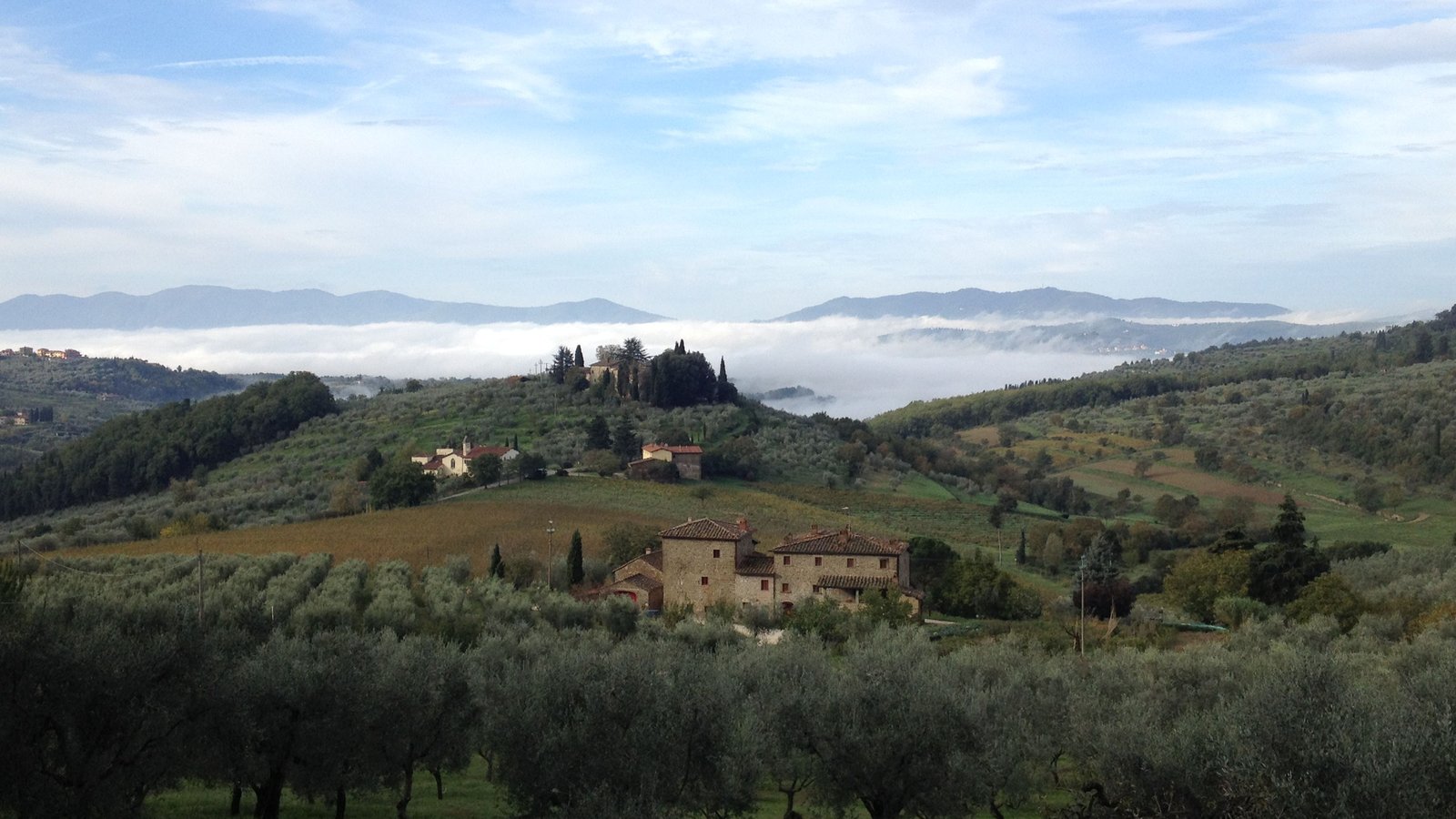
Cortona sits on a hill above the Val di Chiana, about 90 minutes from Florence. The town has medieval walls, Renaissance churches, and views across the valley to Lake Trasimeno. It was an Etruscan settlement before it was a Roman one before it was a Tuscan one.
The Etruscan tombs in the hills below Cortona are the actual reason to go. The Tanella di Pitagora (Pitagora’s Tomb, named after an Etruscan figure misidentified as the Greek philosopher) and the Melone del Sodo are accessible via guided tour and worth seeing if you have any interest in pre-Roman Italy.
What to book: A combined Cortona walking tour + Etruscan tomb visit from Florence. Most operators do 9-10 hour days. Less rushed if you stay overnight.
What it costs: 100-180 EUR per person for a guided day trip.
Cortona is the right answer for travelers who want a Tuscan hilltop town with an Etruscan layer beneath the medieval one. The town sits on a hill overlooking the Val di Chiana and has been continuously inhabited for over 2,500 years. The Etruscan tombs at the foot of the hill (the Tanella di Pitagora and the Melone tombs) are the strongest Etruscan artifacts reachable from Florence. Cortona rewards travelers who come for the museum (the Museo dell’Accademia Etrusca) and stay for a slow lunch with the Val di Chiana view. Skip Cortona for travelers who want a beach or thermal-springs day — the town is hill-country only.
The Cinque Terre (without the cruise ship crowds)
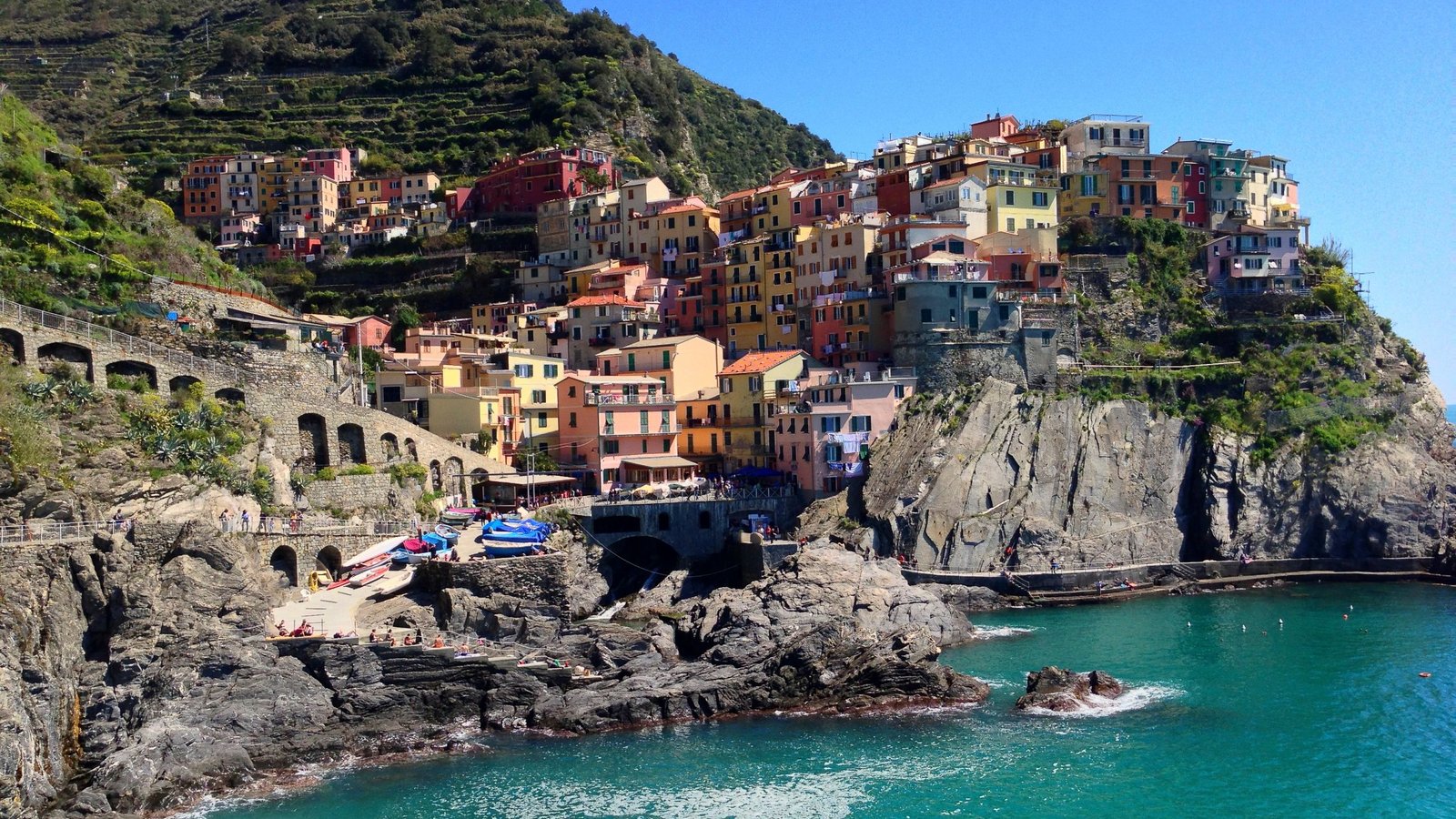
The Cinque Terre is the famous five-village string on the Ligurian coast. From Florence it’s two hours by train (direct from Firenze SMN to Riomaggiore, no changes).
The villages are overrun in summer. They are quiet in spring, fall, and on weekday mornings even in July. The standard visit is the Sentiero Azzurro (coastal trail) connecting the villages. Two sections of it are currently closed due to landslides (Vernazza-Monterosso and Riomaggiore-Manarola), so check current conditions before planning a hike.
The experience that isn’t the trail: take the train between villages, stop in each for an hour, swim off the rocks at Vernazza or Monterosso, eat focaccia in any of them. The Cinque Terre isn’t really about the hiking, it’s about being on the Ligurian coast eating anchovies and lemons.
What to book: Train tickets from Florence (40-60 EUR round trip). No tour operator needed unless you want a guide.
What it costs: Train tickets + food + a focaccia. 80-120 EUR per person for a full day.
Browse Cinque Terre experiences
The Cinque Terre is the right answer for travelers who want a Ligurian coast experience that’s reachable from Florence in about 2.5 hours by train. The five villages (Riomaggiore, Manarola, Vernazza, Monterosso, Corniglia) are connected by a coastal walking path that the article treats as the right way to experience them. Going by train (not cruise ship) and walking between villages is the canonical Cinque Terre day, and the article’s recommendation is right. The Cinque Terre rewards travelers who pick two or three villages for the day rather than trying to cover all five. Skip the cruise-ship version that drops in for 90 minutes — it gives you one village and a souvenir shop.
Bologna (yes, by train, for the day)
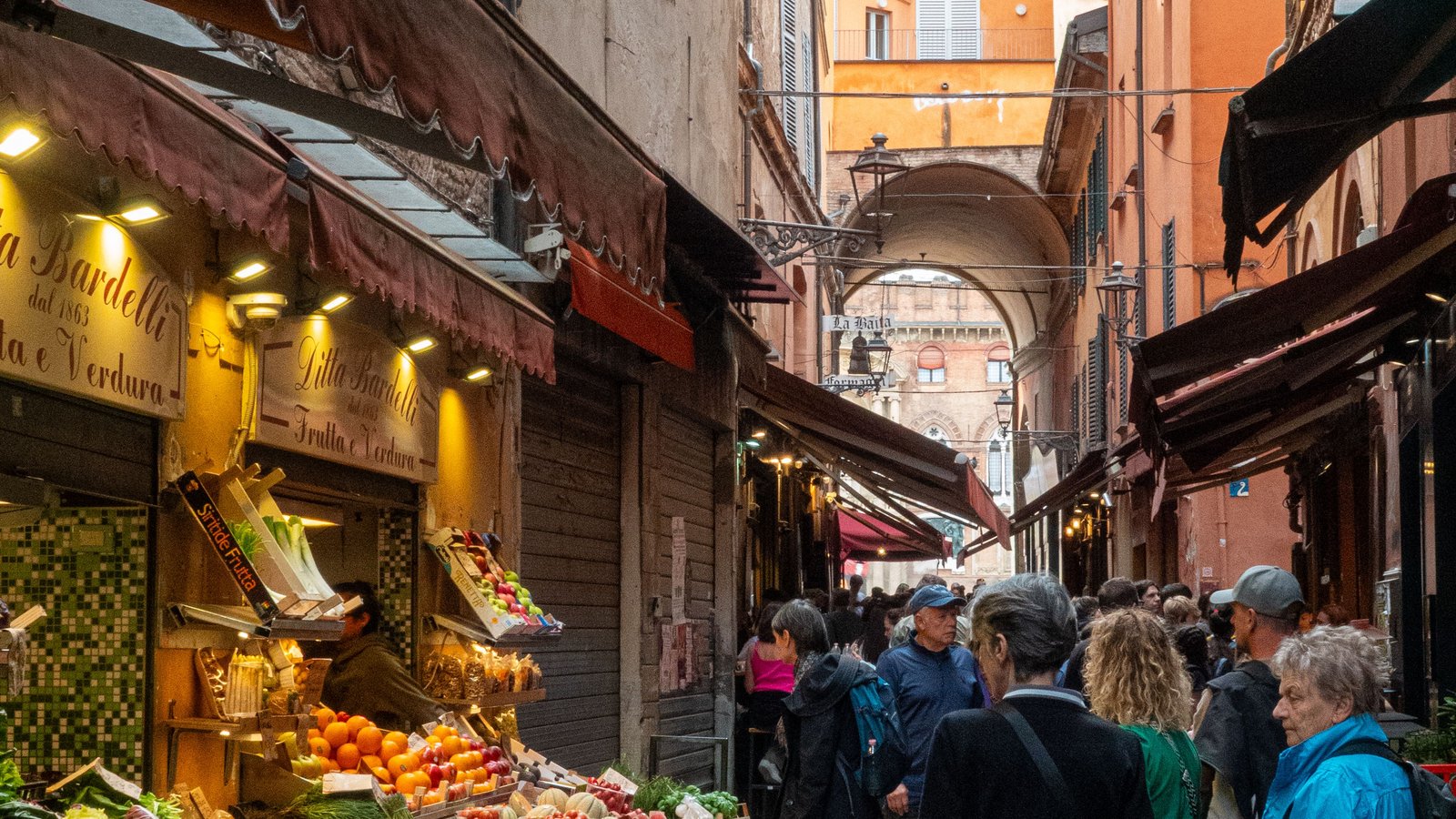
Bologna is 35 minutes from Florence by high-speed train. It’s one of Italy’s great food cities and most Florence visitors skip it entirely.
The reason to go for a day is the food. Bologna has the best pasta in Italy (the actual namesake of tagliatelle al ragù, called “Bolognese” everywhere else). It has mortadella. It has tortellini in brodo. It has the oldest university in Europe and 40 km of porticoes you can walk under.
What to book: Train tickets (30-50 EUR round trip), a Bologna food tour if you want structure (4 hours, 80-150 EUR), or just walk and eat. The Quadrilatero market in the center is the right place to start.
What it costs: 50-80 EUR per person for a self-guided food day, 150-220 EUR with a guided food tour.
Bologna is the right answer for travelers who want to add a major Italian city to a Florence-focused trip. Bologna is 35 minutes from Florence by high-speed train, which makes it a viable day-trip. The city rewards the day with its porticoed streets, the twin towers, the Piazza Maggiore, and the food scene (the article is right that Bologna is Italy’s food capital). A morning train to Bologna, a long lunch, an afternoon walk through the Quadrilatero market area, and a late train back is the right shape. Skip Bologna for travelers who want a quieter day — the city’s energy is more working-Italian than the smaller Tuscan towns.
Volterra and the Etruscan coastline
Volterra is two hours from Florence, in the hills between Tuscany and the sea. It’s quieter than San Gimignano, more atmospheric, and has an Etruscan museum (Museo Etrusco Guarnacci) with artifacts from the area.
The view from Volterra across the rolling hills toward the coast is one of the better ones in Tuscany. The town has alabaster workshops, Roman ruins, and a fortress.
What to book: A guided day trip from Florence combining Volterra with a stop at the Etruscan necropolis outside town. Or drive yourself and wander.
What it costs: 100-180 EUR per person for a guided day trip. Self-guided with a rental car: about the same once you factor in gas and lunch.
Volterra is the right answer for travelers who want an Etruscan hilltop town with a coastline side-trip built into the same day. Volterra sits inland on a tufa hilltop and has been inhabited for over 3,000 years. The Etruscan walls, the Roman theater, and the Guarnacci Etruscan Museum (with the ‘Shadow of the Evening’ bronze statue) are the strongest stops. A morning in Volterra and an afternoon drive to the Etruscan coastline (the Bolgheri / Castiglioncello area) is the right shape for the day. Skip Volterra for travelers who want a beach-only day — the coast at Castiglioncello is functional, not dramatic.
Lucca (the bike version)
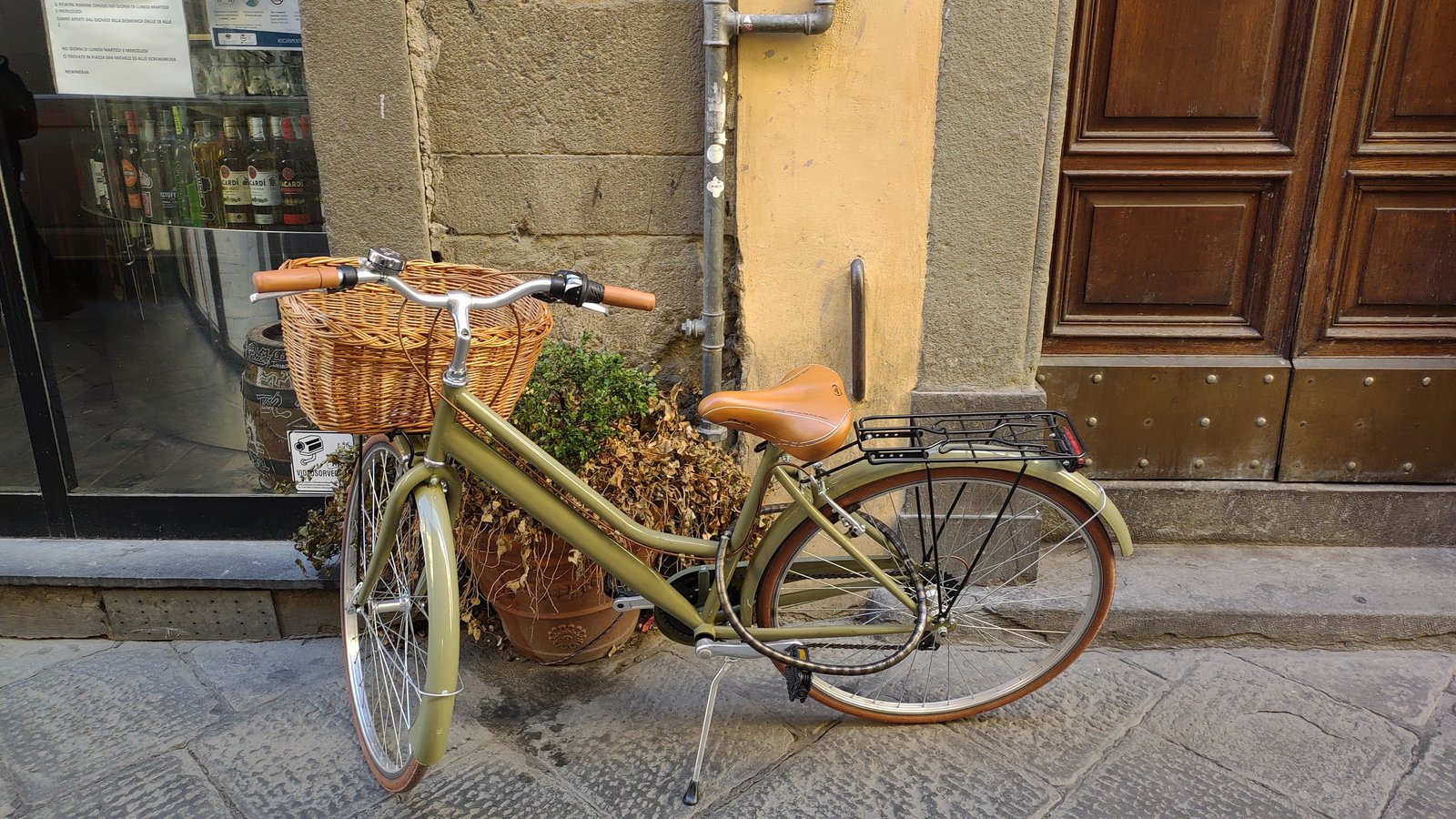
Lucca is 75 minutes from Florence by train. The town is fully enclosed by Renaissance-era city walls, which are wide enough at the top to bike around.
The standard visit is a walk around the walls (about 4 km / 1.5 hours). The better visit is to rent a bike and do the wall loop, then walk the town itself. The town has a Roman amphitheater still in use as a public square, dozens of churches, and very few tour buses compared to Pisa or Florence.
What to book: Train tickets from Florence (20-30 EUR round trip), a bike rental at the Lucca station (10-15 EUR for a day).
What it costs: A full day in Lucca for under 100 EUR per person, including lunch.
Lucca is the right answer for travelers who want a Tuscan town-with-walls experience reachable from Florence in 1.5 hours by train. The town sits inside a complete set of Renaissance city walls, which are now a car-free park where locals and visitors walk and bike. The bike version of Lucca (renting a bike at the train station and circling the walls in 30 minutes) is the right shape for the visit. Lucca rewards travelers who add the climb up one of the wall trees (the Torre Guinigi) and a slow lunch in Piazza dell’Anfiteatro. Skip the car version of Lucca — the town is small and the walls make it work as a slow walk or bike.
The Honest Take
Of these ten, the ones I’d actually prioritize if you have one day outside Florence:
– San Miniato truffle hunting (in season): the most uniquely Tuscan experience on this list
– Carrara marble quarries: genuinely unexpected
– Saturnia thermal springs: if you have a car and a flexible schedule
The Cinque Terre is the most photogenic and the easiest to do without a guide. Bologna is the best food day. Lucca is the best bike ride.
What I’d skip if pressed for time: Civita (worth it, but similar to every other Italian hill town), Montepulciano (over-touristed in summer), Cortona (better as an overnight than a day trip).
This article contains affiliate links to Viator and GetYourGuide. If you book through these links, we may earn a commission at no extra cost to you. Our editorial recommendations are independent of affiliate relationships. See our affiliate disclosure for details.
Last reviewed: July 2026. Prices, train schedules, and seasonal availability verified at time of writing. Confirm details on each operator’s site before booking.